On April 22 and 24, 2026, VETS | EnE participated in the consultation workshops titled “Developing Economic and Technical Norms for Energy Efficiency Consulting Services in Vietnam,” held in Ho Chi Minh City and Hanoi, respectively, serving as both a national consulting partner and a workshop co-organizer. The events were organized under the direction of the Agency for Innovation, Green Transition and Industry Promotion (Ministry of Industry and Trade), in coordination with the Danish Energy Agency and the Embassy of Denmark in Vietnam.
The workshops were held under Component 3 of the Vietnam–Denmark Energy Partnership Programme, Phase 2020–2025 (DEPP3), funded by the Government of Denmark. Participants included representatives from the Agency for Innovation, Green Transition and Industry Promotion, provincial Departments of Industry and Trade, industry promotion and energy conservation centers, research institutes, universities, and industrial enterprises.
The workshops aimed to present research findings and gather stakeholder feedback on proposed economic and technical norms for publicly funded services in the field of energy efficiency and conservation, particularly energy auditing and the establishment of energy management systems.
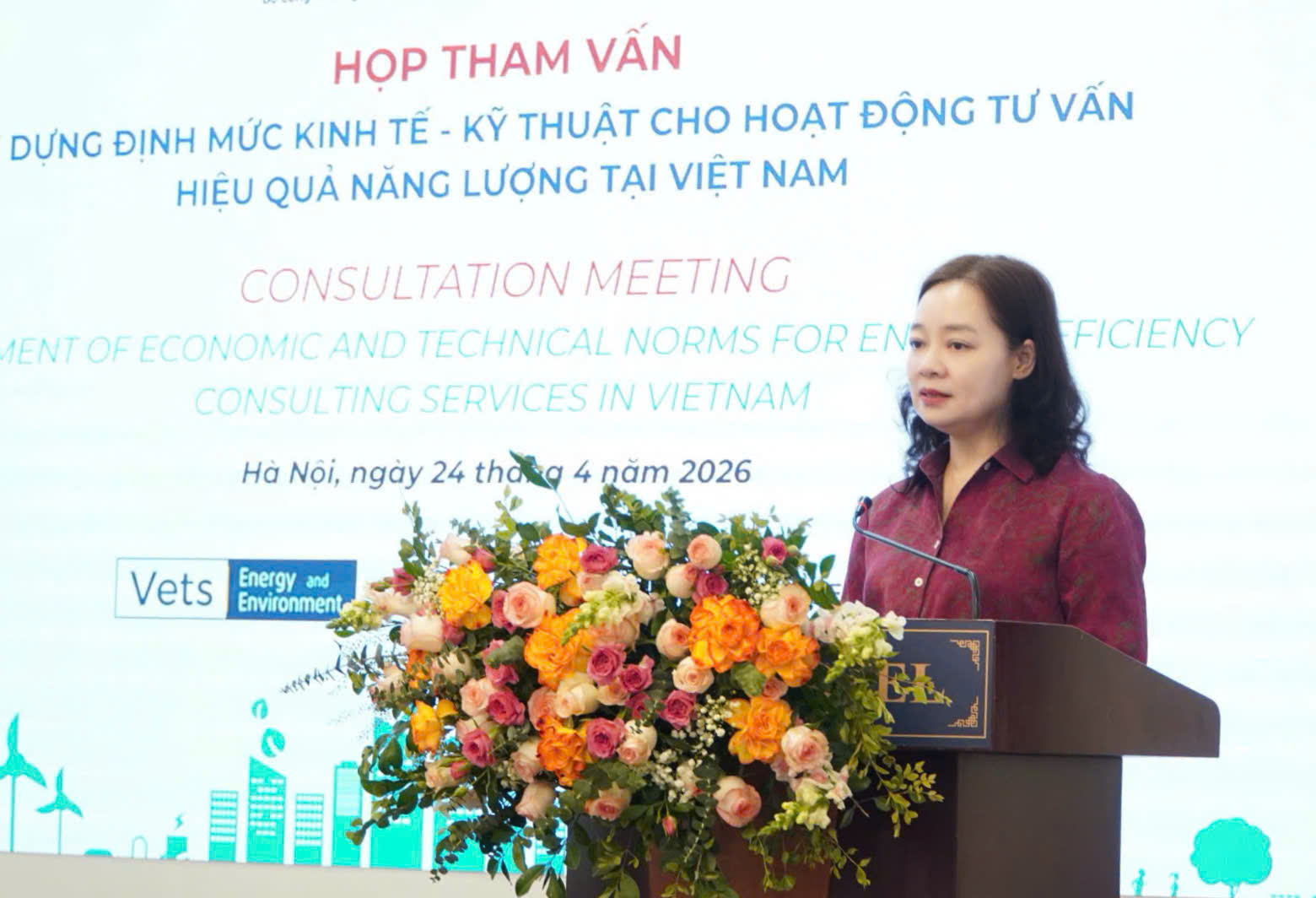
Ms. Nguyen Thi Lam Giang, Director General of the Agency for Innovation, Green Transition and Industry Promotion, delivers the opening remarks.
Establishing a Standardized Framework for Energy Efficiency Consulting Services
In her opening remarks, Ms. Nguyen Thi Lam Giang, Director General of the Agency for Innovation, Green Transition and Industry Promotion, highlighted the importance of existing regulations governing energy efficiency activities in Vietnam.
She noted that Circular No. 25/2020/TT-BCT, issued in 2020, established requirements for developing and reporting on energy efficiency and conservation plans, as well as conducting energy audits. This regulatory framework has become an important tool for designated energy-intensive facilities to assess their energy consumption, identify energy-saving potential, and propose appropriate efficiency improvement measures.
Alongside energy auditing, the development and implementation of energy management systems in accordance with Vietnamese and international ISO standards have also been recognized as complementary solutions for enterprises.
However, practical implementation has revealed inconsistencies in the quality of energy auditing and energy management consulting services among different service providers.
According to Ms. Giang, disparities in technical expertise, human resources, and equipment have highlighted the urgent need for a clear reference framework defining the scope of work, resource requirements, and expected service deliverables.
In response, the Ministry of Industry and Trade has been actively developing draft economic and technical norms for energy auditing and energy management consulting services, with the intention of issuing them through a ministerial circular in 2026.
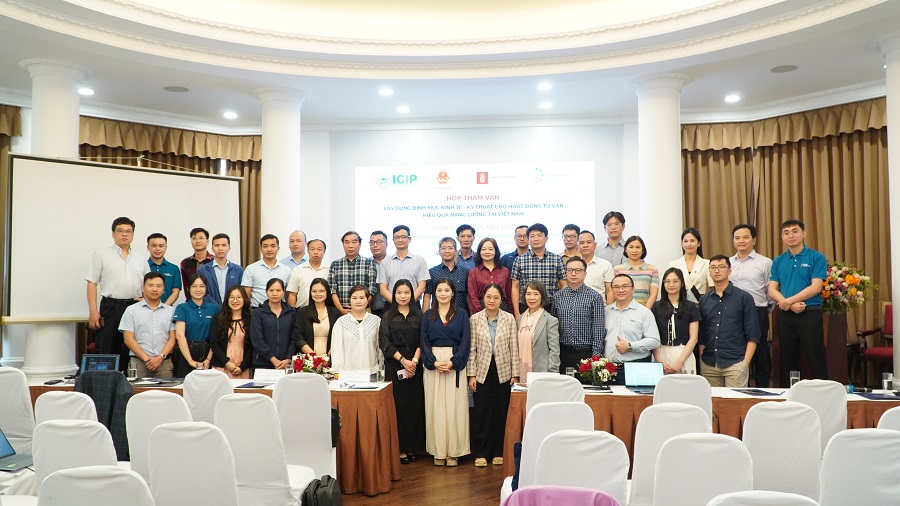
Representatives attending the consultation workshop in Northern Vietnam.
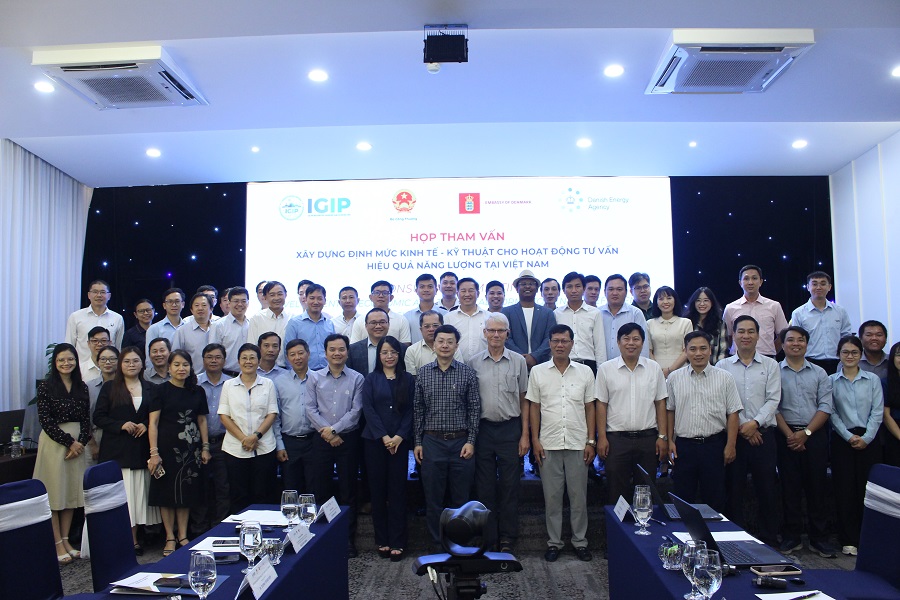
Representatives attending the consultation workshop in Southern Vietnam.
International Experience in Energy Auditing and Energy Management
At the workshop, Mr. Jorgen Hvid, Long-Term Advisor to the DEPP3 Programme, presented an overview of selected international approaches to establishing norms and quality assurance mechanisms for energy auditing and energy management systems.
He highlighted several international practices:
- South Korea: Ensures energy audit quality through regulations on audit duration and auditor qualifications.
- India: Combines market-based mechanisms with financial support and sector-specific standardization.
- China: Integrates energy auditing with compliance requirements related to energy consumption norms.
- Europe and Denmark: Apply harmonized legal frameworks, robust Monitoring, Reporting and Verification (MRV) systems, auditor certification, and multi-level assessment mechanisms to ensure service quality and prevent competition based solely on low pricing.
Drawing on these experiences, Mr. Hvid recommended that Vietnam develop a comprehensive energy auditing framework incorporating reasonable cost norms, sector-specific technical standards, mandatory audit requirements, and a national MRV system.
He also emphasized the importance of integrating online reporting mechanisms to improve audit quality and strengthen implementation effectiveness.
VETS | EnE Presents Vietnam’s Regulatory Framework and Draft Norms for Energy Auditing
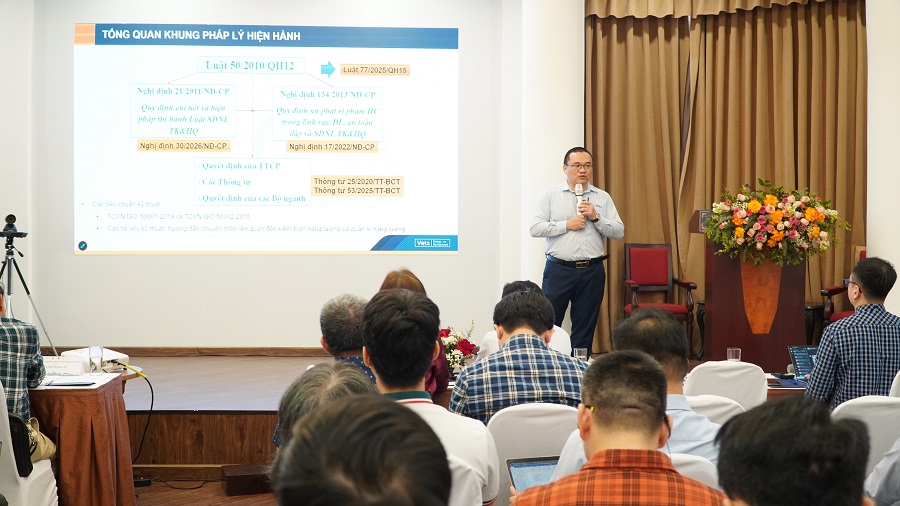
Mr. Duong Chi Cong, representative of Vietnam Technology Solutions Joint Stock Company (VETS | EnE), delivers a presentation at the workshop.
Mr. Duong Chi Cong, representing Vietnam Technology Solutions Joint Stock Company (VETS | EnE), presented an overview of Vietnam’s existing legal framework for energy auditing and energy management.
His presentation focused on clarifying regulations concerning mandatory energy audit subjects, energy auditing procedures, requirements for energy service providers, and the obligations of designated energy-intensive facilities.
He also pointed out that although Vietnam’s regulatory framework has established relatively comprehensive requirements for auditing procedures and reporting, specific provisions concerning resource consumption norms and service quality standardization remain insufficient.
These gaps have contributed to disparities in service providers’ technical capabilities and inconsistencies in the quality of consulting deliverables.
Mr. Cong subsequently introduced the proposed economic and technical norms for energy auditing services.
The draft norms were developed based on three primary resource components:
- Labor: Human resources and professional expertise required for energy auditing activities.
- Machinery and Equipment: Technical instruments and equipment necessary for conducting audits.
- Materials: Consumables and other materials required throughout the auditing process.
The proposed norms closely follow existing regulatory procedures for energy auditing and classify facilities into three groups based on annual energy consumption, ranging from 1,000 tonnes of oil equivalent (TOE) to more than 10,000 TOE.
The framework clearly defines each stage of the energy auditing process, including preparation, data collection, on-site surveys, measurements, analysis, and the development of recommended energy efficiency measures.
In addition, the draft establishes criteria for evaluating service quality and requirements for final deliverables. Energy audit reports must comprehensively reflect current energy consumption patterns, identify energy-saving potential, and assess the investment effectiveness of proposed solutions.
Developing Economic and Technical Norms for Energy Management System Consulting
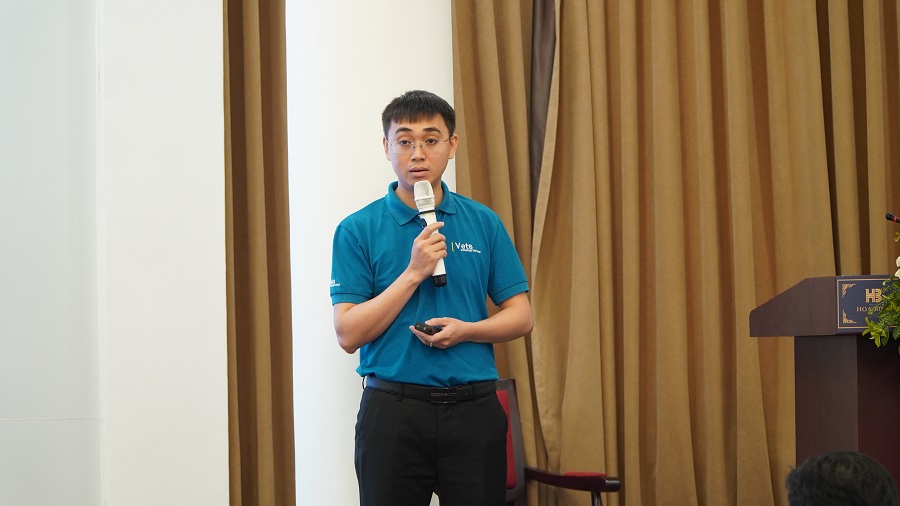
Mr. Nguyen Trong Hau, Head of the Technical Solutions Department at Vietnam Technology Solutions Joint Stock Company (VETS), presents the draft economic and technical norms for energy management system consulting services.
In the final technical presentation, Mr. Nguyen Trong Hau, Head of the Technical Solutions Department at VETS | EnE, introduced the draft economic and technical norms for consulting services related to the establishment of energy management systems.
The proposed framework consists of 15 implementation steps, covering the entire process from initial preparation and energy performance assessment to system development, operation, monitoring, evaluation, and continuous improvement.
Key activities include:
- Preparing for energy management system implementation.
- Assessing current energy management practices and energy performance.
- Establishing energy baselines (EnBs).
- Defining energy performance indicators (EnPIs).
- Developing and implementing energy management procedures.
- Monitoring and evaluating system performance.
- Implementing continual improvement measures.
Similar to the proposed energy auditing norms, the framework categorizes enterprises according to their annual energy consumption levels.
It also specifies requirements for human resources, equipment, and expected deliverables, including energy management system documentation, energy performance indicators, energy baselines, and action plans for improving energy efficiency.
The proposed norms are designed to ensure a systematic approach, practical applicability, and continual improvement in energy management practices across industrial enterprises.
Stakeholder Consultation and Recommendations
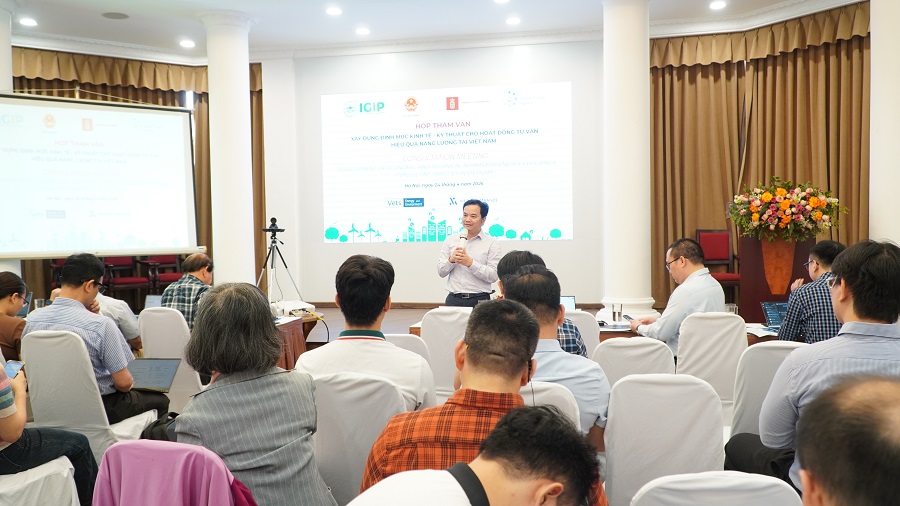
The consultation workshops received numerous contributions and recommendations from participating stakeholders.
The discussion sessions featured active participation from representatives of provincial Departments of Industry and Trade, industry promotion centers, energy conservation centers, consulting organizations, and industrial enterprises from both Northern and Southern Vietnam.
Feedback collected during the two regional workshops demonstrated strong stakeholder interest in refining the proposed economic and technical norms.
Many participants recommended further reviewing and updating the draft to ensure greater flexibility and alignment with the specific characteristics of different industrial sectors and enterprise sizes.
Stakeholders also emphasized the importance of improving the practical feasibility of the proposed requirements to facilitate effective implementation.
The consultation outcomes from both workshops will provide an important foundation for finalizing the draft economic and technical norms ahead of their anticipated issuance.
Once adopted, the framework is expected to contribute to improving the quality and consistency of energy consulting services, strengthening energy management practices, and promoting energy efficiency and conservation throughout Vietnam.
Original Article: Vietnam–Denmark Energy Partnership Programme (DEPP3)


