
On October 31, 2026, the Ministry of Industry and Trade issued Circular No. 70/2026/TT-BCT stipulating economic and technical norms for conducting energy audits . The Circular specifies the cost components, divides the norms according to annual energy consumption levels, and determines the basis for application in detailed energy audits at energy-consuming facilities.
Regulations on economic and technical standards for conducting energy audits.
According to Circular No. 70/2026/TT-BCT, economic and technical norms determine the necessary expenditure for conducting energy audits. These expenditures include labor, machinery, equipment, and materials.
The standard rates are applied to each unit of energy audit work. The scope of work extends from the preparation phase to the completion of the audit report according to technical requirements.
The standard cost estimate includes the code, job name, unit of measurement, work components, applicable coefficient, and standard cost tables.
The work components are structured according to the guidelines in Circular No. 64/2026/TT-BCT dated September 30, 2026, of the Ministry of Industry and Trade, which regulates the planning and reporting of energy efficiency and conservation plans. The Circular also provides guidance on applying energy management models and conducting energy audits.
The consumption norms are divided into 8 groups based on annual energy consumption levels.
One of the notable points of Circular No. 70/2026/TT-BCT is the division of economic and technical norms into 8 groups , based on the annual energy consumption of energy-using facilities, calculated in tons of oil equivalent (TOE):
| Code | Annual energy consumption |
| KTNL.01 | From 500 to under 1,000 TOE |
| KTNL.02 | From 1,000 to under 3,000 TOE |
| KTNL.03 | From 3,000 to under 10,000 TOE |
| KTNL.04 | From 10,000 to under 20,000 TOE |
| KTNL.05 | From 20,000 to under 50,000 TOE |
| KTNL.06 | From 50,000 to under 200,000 TOE |
| KTNL.07 | From 200,000 to under 1,000,000 TOE |
| KTNL.08 | From 1,000,000 TOE and above |
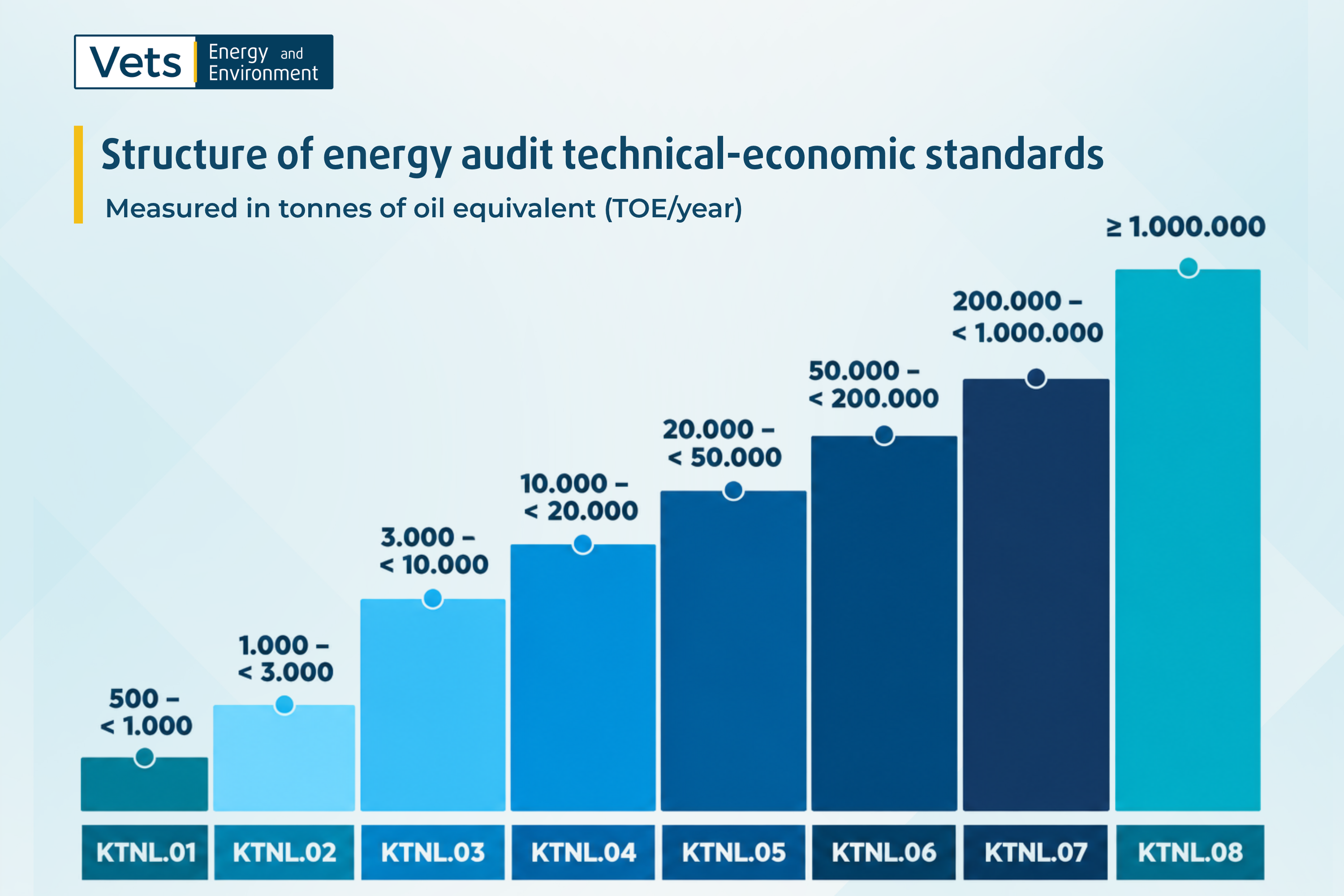
For each energy consumption level, the regulations specify the corresponding cost components for labor, machinery, equipment, and materials used in energy audits.
Specify the cost components for conducting energy audits.
Circular No. 70/2026/TT-BCT stipulates the cost components for energy audit activities, including:
- Labor standards: Determining the labor costs required to perform each component of the energy audit process.
- Equipment and machinery usage norms: Regulations governing the consumption of machinery and equipment used in energy audit activities.
- Material consumption standards: Determine the amount of materials required to carry out the energy audit tasks.
General expenses: These include costs related to conducting energy audits as required by regulations. - These standards serve as the basis for determining resources, developing budgets, and organizing the implementation of energy audits according to technical requirements.
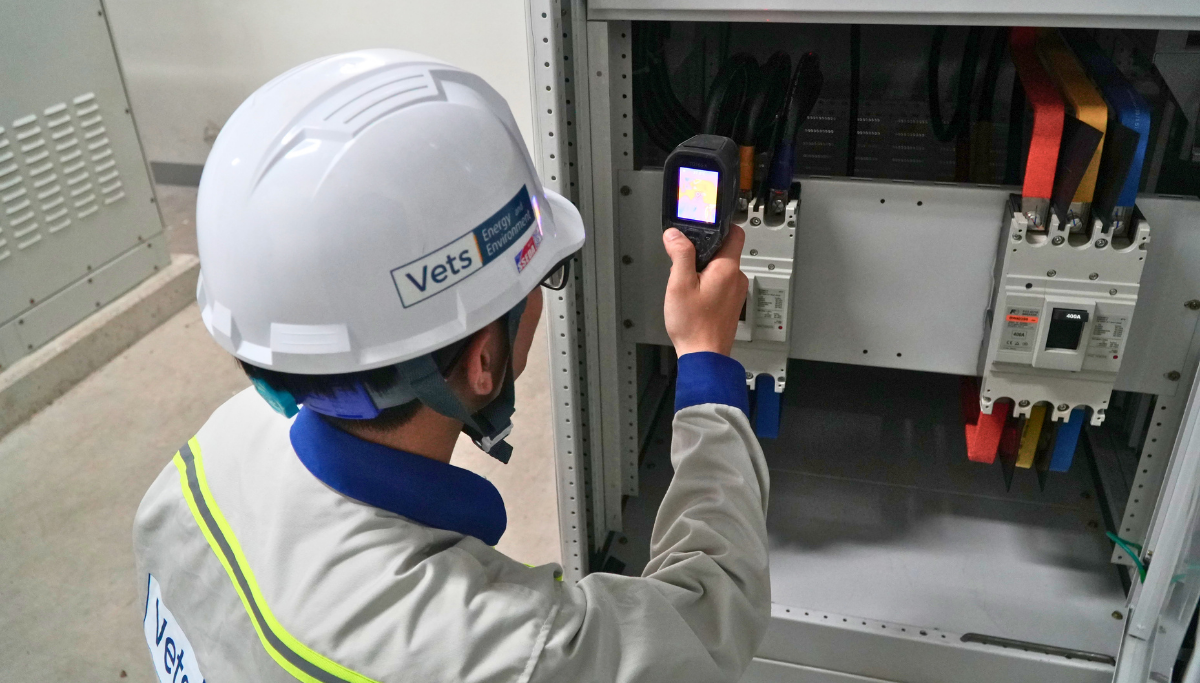
The activity involves measuring and checking the technical parameters of equipment during an energy audit at the production facility.
The significance of the Circular for energy audit activities.
Circular No. 70/2026/TT-BCT contributes to perfecting the economic and technical norms in energy audit activities. This provides a more consistent basis for determining costs, preparing estimates, and organizing implementation.
For consulting firms, the Circular provides a basis for determining resources appropriate to the scale of energy consumption of a facility.
For businesses, this regulation supports the planning and budgeting of energy audits. At the same time, it provides businesses with a stronger basis for collaboration with consulting firms during implementation.


