
In industrial production, improving energy efficiency is one of the solutions that helps businesses save on operating costs and reduce greenhouse gas emissions.
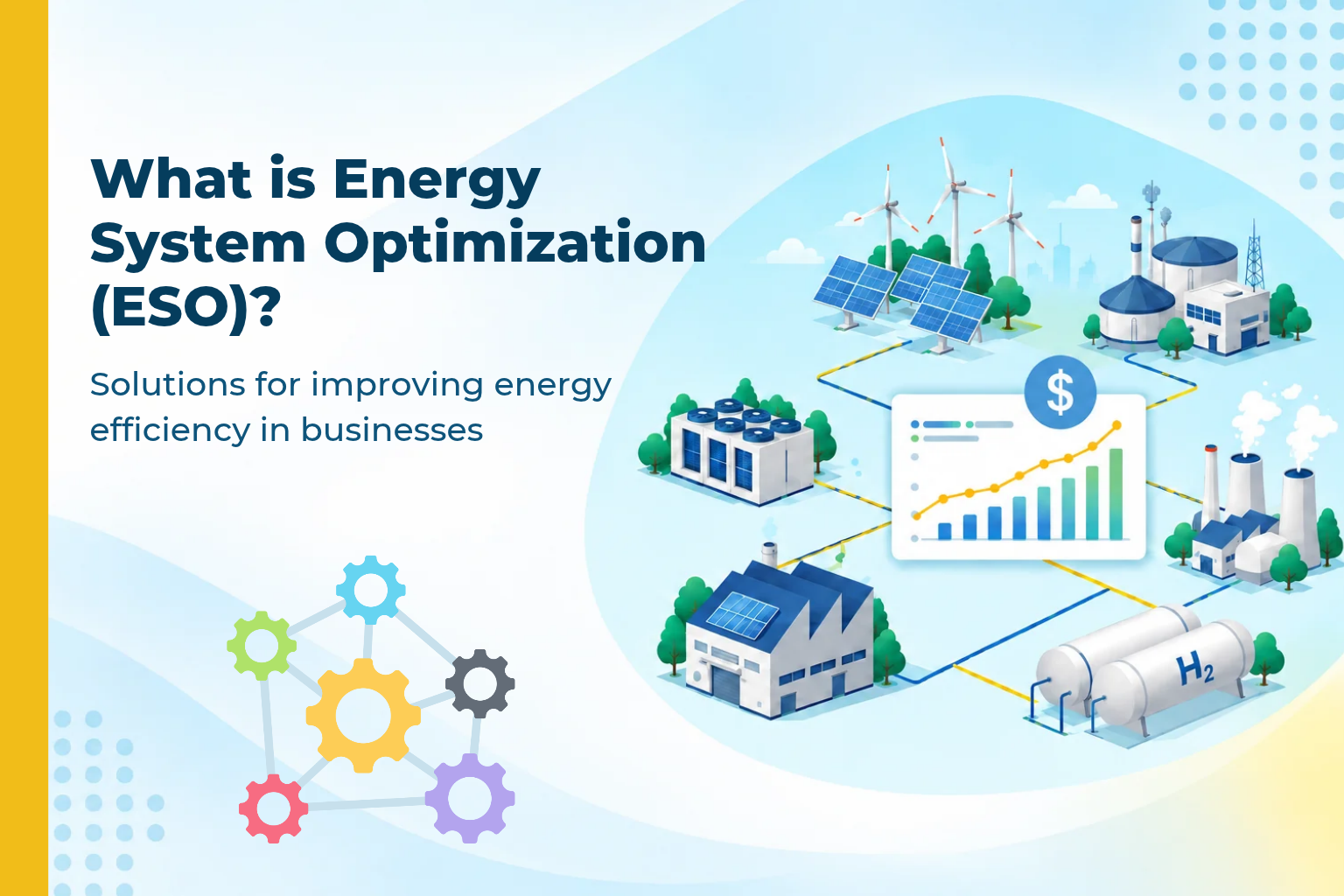
What is Energy System Optimization (ESO)?
Energy Systems Optimization (ESO) is one of the methods for improving industrial energy efficiency, along with Energy Management Systems (EnMS).
ESO focuses on performance assessment, identifying technical problems and improvement opportunities, thereby enhancing energy efficiency through appropriate operational, control, and maintenance solutions.
ESO was introduced and piloted during the initial phase of the South African Industrial Energy Efficiency Program (SA IEE Project), which began in 2010 and concluded in June 2016.
2. Objectives of energy system optimization
Promoting the adoption of ESO in industry aims at the following objectives:
- Improving energy efficiency: Expanding the application of energy management and optimization methods in businesses.
- Promoting investment in energy efficiency: Increasing access to financial mechanisms and policies that support investment.
- Developing technical capabilities: Training engineers, technicians, and operators to enhance their ability to implement ESO and EnMS.
- Improving energy data: Enhancing the quality of energy consumption data collection and reporting, and identifying potential savings.
- Supporting greenhouse gas emission reduction: Linking energy efficiency improvement activities to emission reduction targets.
These objectives are implemented through strengthening the policy framework, providing technical support to businesses, and developing training programs at multiple levels.
> See also: What is an Energy Management System (EnMS)? Benefits and effective implementation methods
3. Expected benefits of implementing ESO
Promoting the adoption of ESO and EnMS is expected to bring energy, economic, and environmental benefits.
- Energy and cost savings: Demonstration projects are designed to demonstrate the energy and cost savings benefits of implementing EnMS and ESO in businesses.
- Enhanced implementation capacity: Training programs help develop a workforce capable of implementing EnMS and ESO in industry.
- Promoting investment: Demonstrating the effectiveness of solutions combined with support for access to finance is expected to encourage businesses to invest in energy efficiency.
- Contributing to climate change mitigation: The program identifies greenhouse gas emission reduction and climate change mitigation benefits as objectives and expected benefits associated with improving energy efficiency.
Reference document: https://www.unido.org/sites/default/files/files/2022-07/GFSAF-120487_TOR_2204.pdf


