
From October 11-13, 2026, under the direction of the Gia Lai Provincial Department of Industry and Trade, VETS | EnE organized a training program to raise awareness about energy saving and efficiency, and to guide the application of ISO 50001:2018 standards in energy management at three factories in the province.
The program was implemented at the Gia Lai Cassava Starch Factory (a branch of Quang Ngai Agricultural and Food Products Joint Stock Company), Kamado Industrial Joint Stock Company, and Tan Dai Hung General Trading Company Limited.
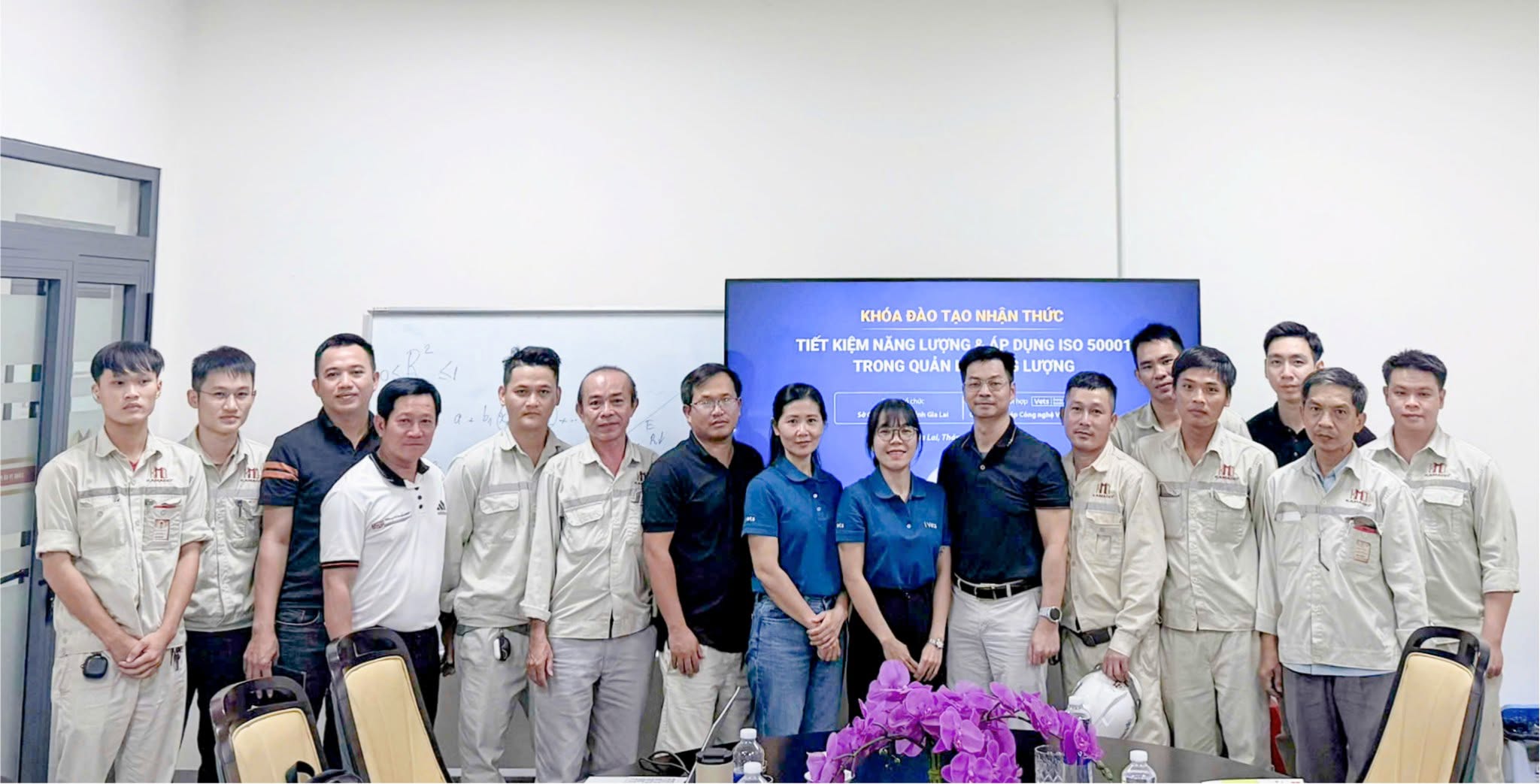
Training at Kamado Industrial Corporation
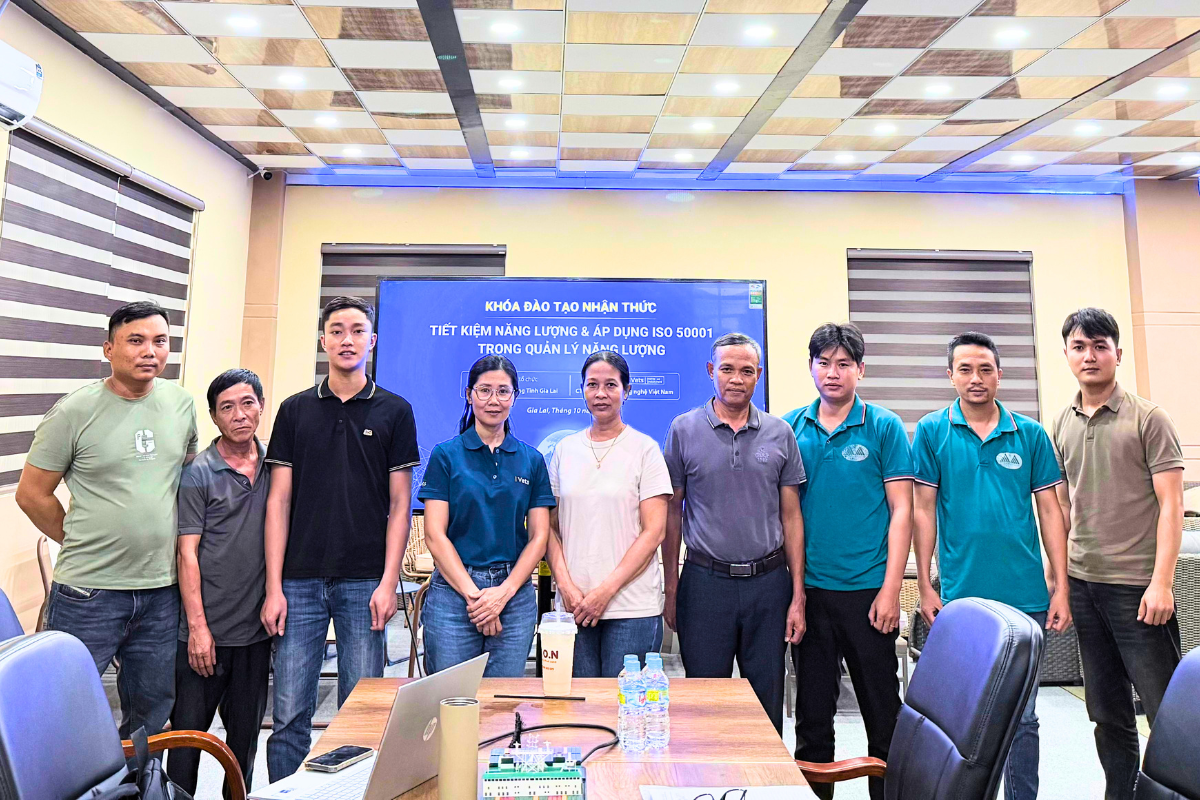
Training at Tan Dai Hung General Trading Company Limited
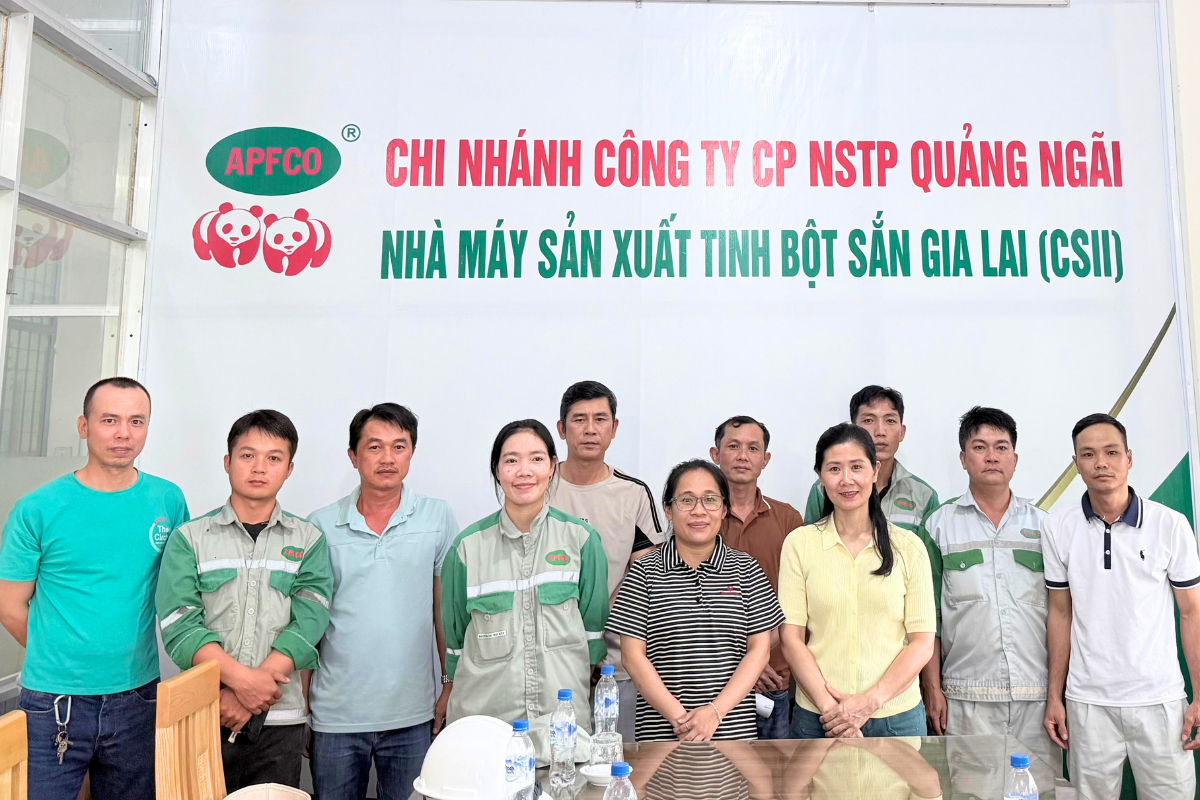
Training at Gia Lai Cassava Starch Factory (Branch of Quang Ngai Agricultural and Food Products Joint Stock Company)
VETS | EnE experts conducted on-site surveys of energy use and management at each factory, understanding the characteristics of the production line, energy-consuming equipment systems, and current management and operation practices. Based on this, the program was implemented in accordance with the actual conditions and the need to improve energy efficiency for each unit.
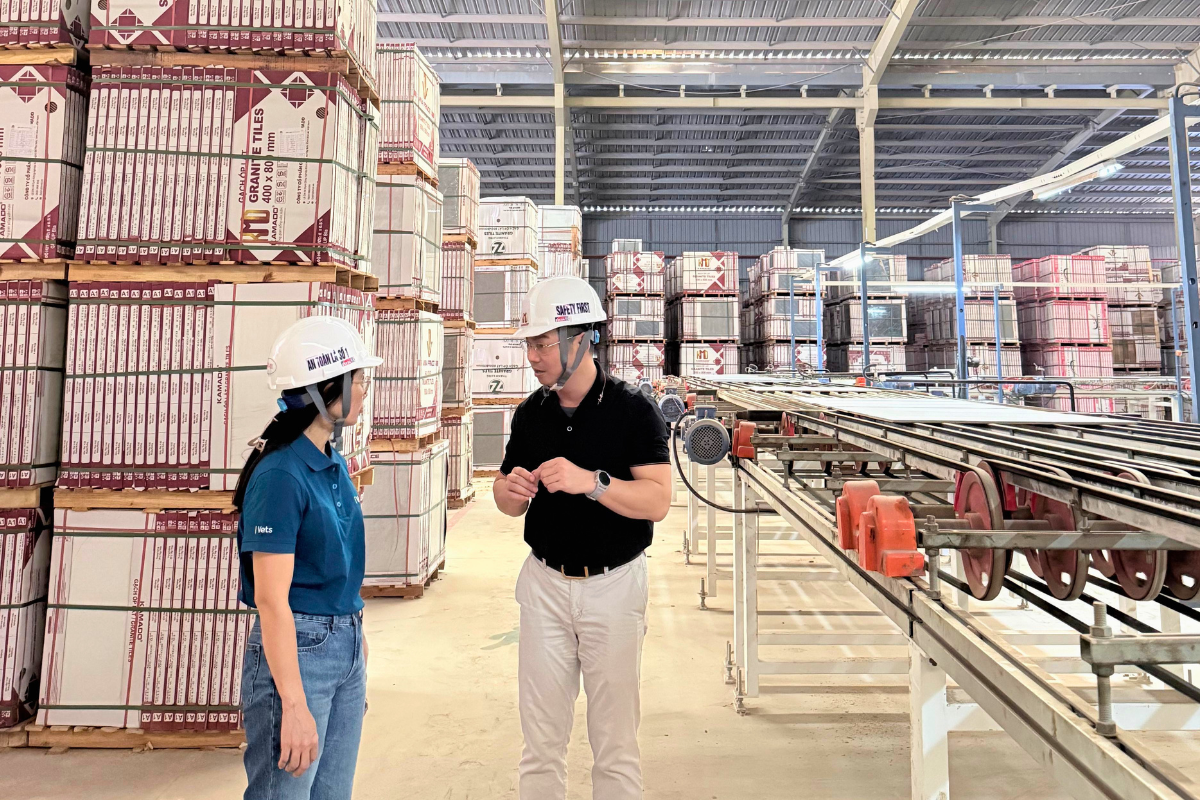
Dr. Do Thi Loan inspects the Kamado Industrial Corporation factory.
Updating policies and improving the capacity for efficient energy management and utilization.
Throughout the three training sessions, Dr. Do Thi Loan – VETS | EnE expert and lecturer at the University of Electrical Engineering – directly imparted knowledge and guided practical exercises, focusing on three key areas:
1. Legal framework on energy conservation and efficiency in Vietnam
The updated legal framework focuses on the Law on Economical and Efficient Energy Use No. 50/2010/QH12, the amended Law No. 77/2025/QH15, and Decree No. 30/2026/ND-CP. The content clarifies the responsibilities of key energy-consuming facilities in appointing energy managers, conducting periodic energy audits, developing plans, reporting on energy use, and complying with prescribed energy consumption norms.
2. Energy management models and energy management systems
This course introduces energy management models for businesses and provides guidance on building and operating an energy management system according to ISO 50001:2018 standards, based on the PDCA continuous improvement cycle. The content focuses on energy review methods, identifying significant energy consumption areas (SEUs), establishing energy efficiency indicators (EnPI), energy baselines (EnB), developing action plans, and monitoring implementation results. Simultaneously, participants are introduced to methods for assessing energy management maturity according to ISO 50005, thereby determining an appropriate implementation roadmap tailored to the specific conditions of each factory.
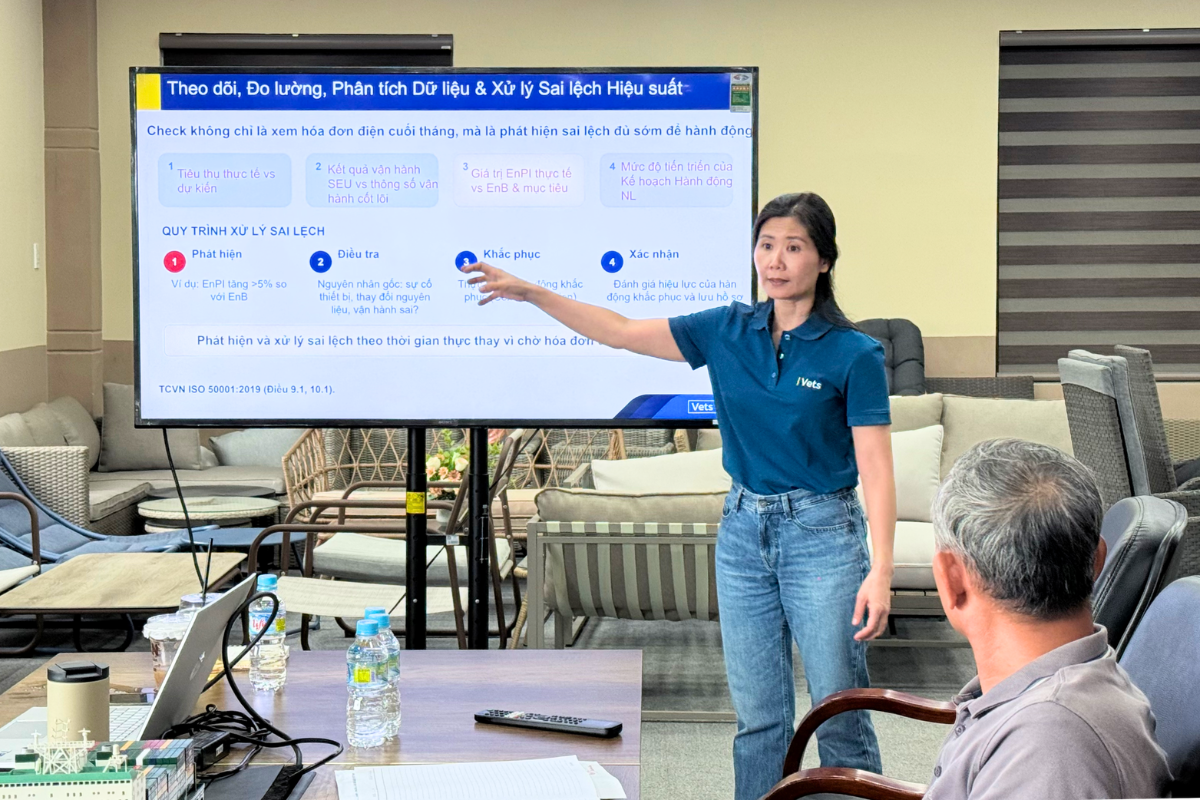
Implementing an appropriate energy management model will improve energy efficiency.
3. Solutions for energy saving and efficiency
Dr. Do Thi Loan introduced technical solutions to improve energy efficiency in high-energy-consuming systems within factories, such as electric motors, pumps, fans, compressed air, lighting, refrigeration systems, and boilers. In addition, the program guided participants on methods for evaluating the economic and financial effectiveness of energy saving projects through indicators such as SPP, NPV, and IRR; introduced the ESCO/EPC energy service model; and discussed trends in renewable energy application and digital energy monitoring in production operations.
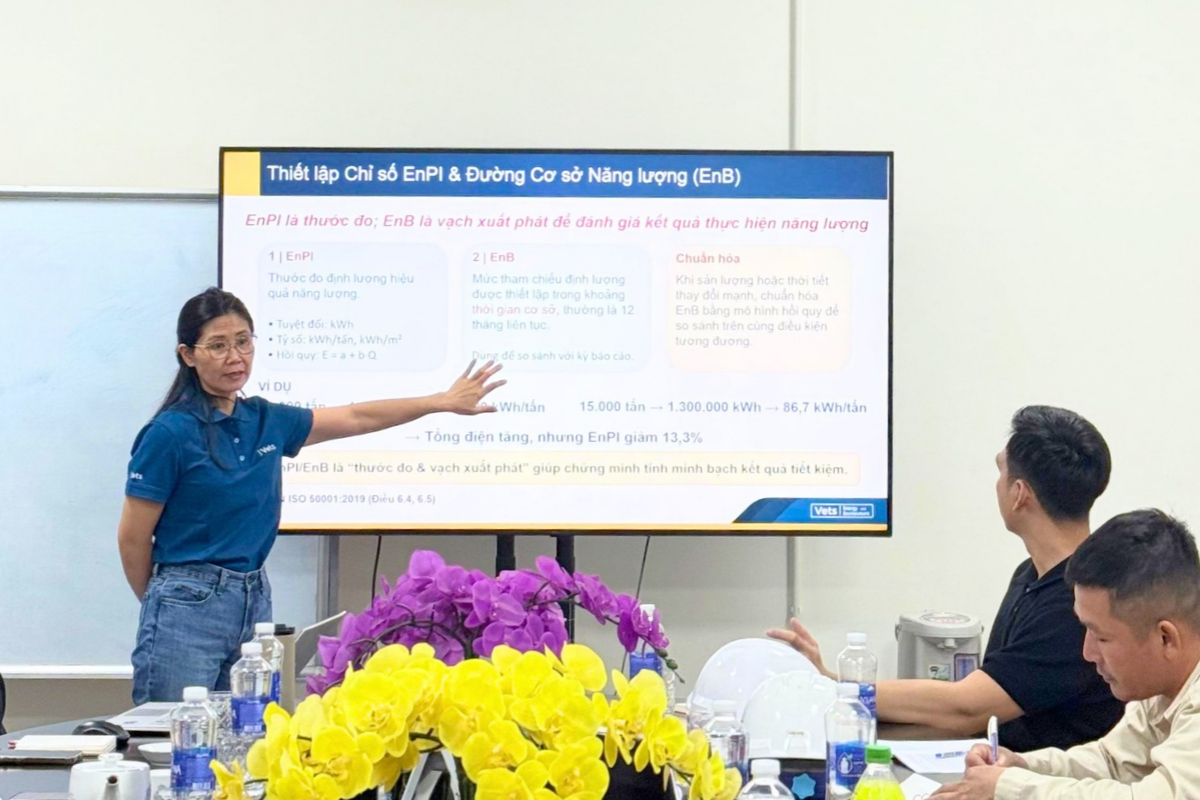
One of the energy-saving solutions for businesses was introduced during a training session at Kamado Industrial Corporation.
Connecting training with practical experience, aiming to improve energy efficiency at the factory.
The program’s highlight is the combination of specialized knowledge, case studies, and on-site surveys at individual production facilities. This approach helps trainees connect the training content with the equipment and operational activities at their units, thereby gradually identifying opportunities to improve energy efficiency.
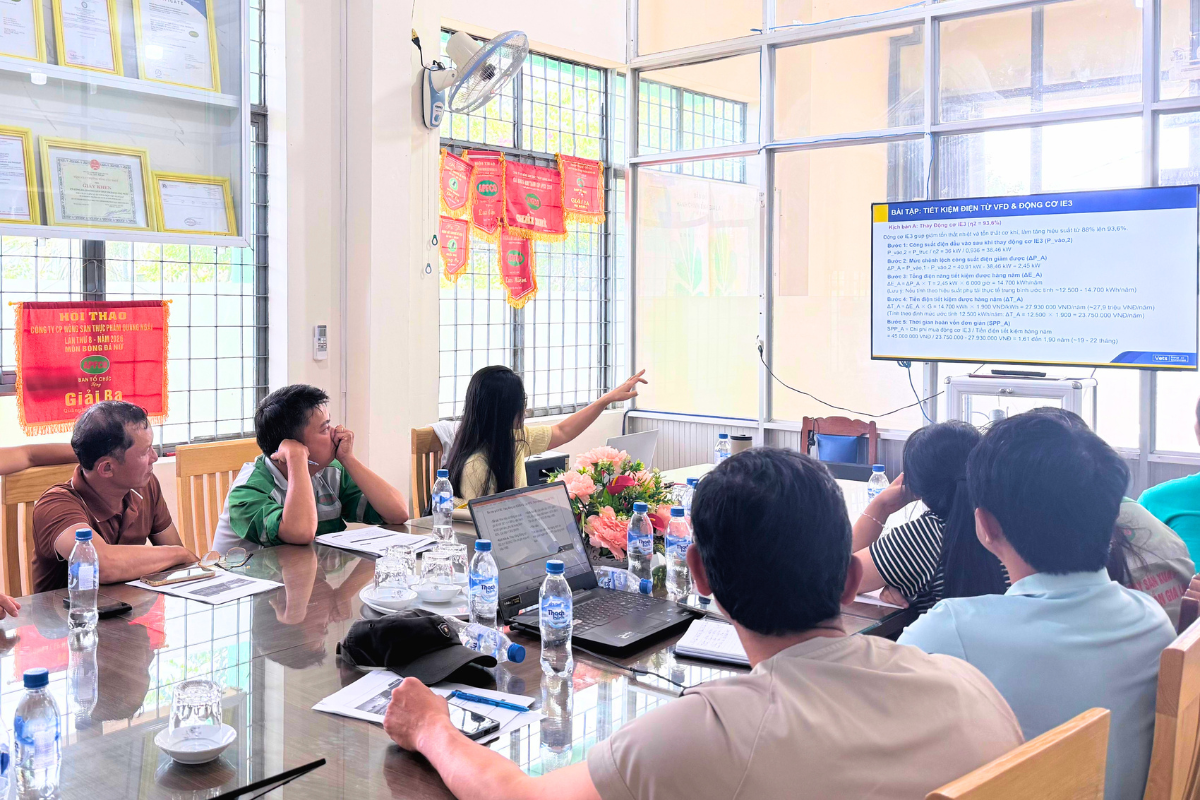
Practical exercises are integrated into the lecture content.
Following the training program, the technical staff and energy personnel at the factories are expected to be able to proactively review the current energy usage, identify areas and equipment with significant energy consumption, propose appropriate energy-saving solutions, and participate in building, operating, and improving the energy management system according to ISO 50001:2018.
Through training and field surveys, VETS | EnE continues to support businesses in improving energy management capabilities, optimizing production costs, and promoting energy-saving and efficient energy use, contributing to green production and sustainable development.


