
In the context of increasing climate change and the global trend of net zero emissions commitments, green building is no longer just an option to enhance one’s image but is gradually becoming a mandatory standard for businesses, real estate developers, and industrial parks. With a pioneering approach in the energy and environment sector, VETS | EnE is committed to providing comprehensive green building consulting services , contributing to creating a sustainable future for the community.
What is a green building?
With the increasing demand for green buildings, the efficient way to assess a building’s sustainability performance is via LEED certification. Obtaining this certificate brings many benefits to businesses in general and particularly it’s occupants. For example, by achieving sustainable development goals, businesses can reduce energy consumption, and save water as well as maintenance costs. As a result, this standard contributes to the growth of the company along with achieving a sustainable architecture.
According to Decree 15/2021/ND-CP detailing some contents on the management of construction investment projects, a green building is defined as a construction project designed, built, and operated to meet criteria and standards for efficient energy use and resource conservation; while ensuring comfort and quality of living environment inside the building and protecting the external environment.
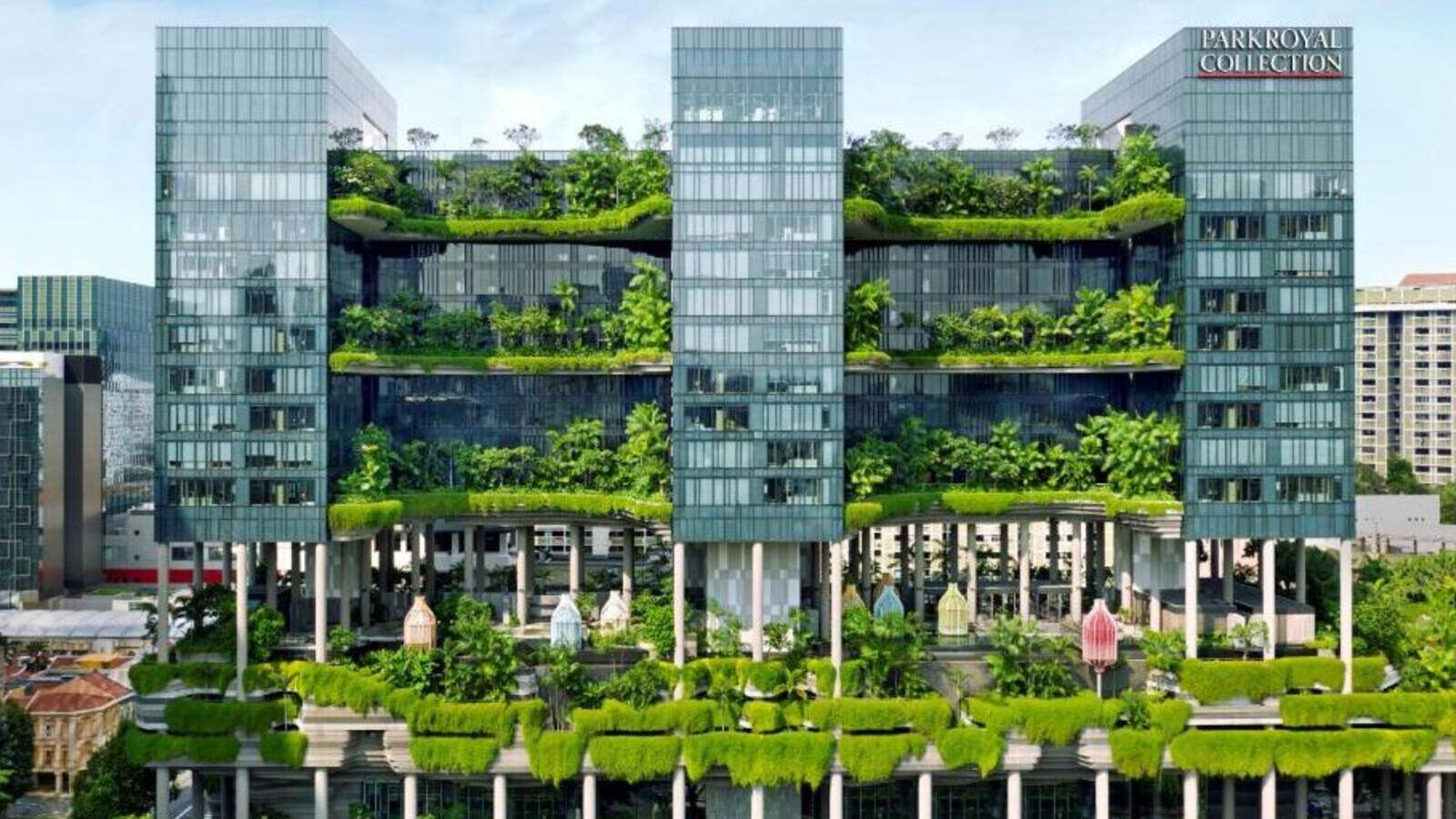
Green buildings must meet standards for efficient and economical energy use (Illustrative image)
These buildings are typically evaluated according to prestigious international standards such as LEED, LOTUS, or EDGE, revolving around core criteria: energy efficiency, CO2 emission reduction, sustainable material use, and improved indoor air quality. As a result, green buildings not only reduce long-term operating costs but also create a healthy living and working environment, contributing to improved health and productivity for users.
LEED – a green building certification according to international standards
Leadership in Energy and Environment Design (LEED) is one of the most popular green building certification programs. In fact, this is a rating system recognized by the US Green Building Council to assess the environmental performance of a building.
According to USGBC, “Green building is the practice of designing, constructing and operating buildings to maximize occupant health and productivity, use fewer resources, reduce waste and negative environmental impacts, and decrease life cycle costs.”
Furthermore, LEED certification helps to recognize best-in-class building strategies and practices in key areas of human and environmental health. Therefore, it is important for business owners, tenants, contractors, and others need to increase their understanding of the certification framework.
Among these, LEED OM (Operations and Maintenance) Gold is one of the most popular certification levels, awarded to buildings that have been put into operation but continue to demonstrate superior environmental and energy efficiency during maintenance and operation.
As a professional partner in LEED OM certification consulting projects, VETS | EnE has implemented numerous practical projects for businesses. Notably, in the period of 2024-2025, VETS | EnE collaborated with MBbank on a LEED OM consulting project for the building at 18 Le Van Luong Street, contributing to the building achieving LEED OM – Gold certification and the “5-Star Green Building” title awarded by the Hanoi Department of Industry and Trade. This demonstrates VETS | EnE’s capabilities in the field of energy saving and efficiency, meeting international green building standards.
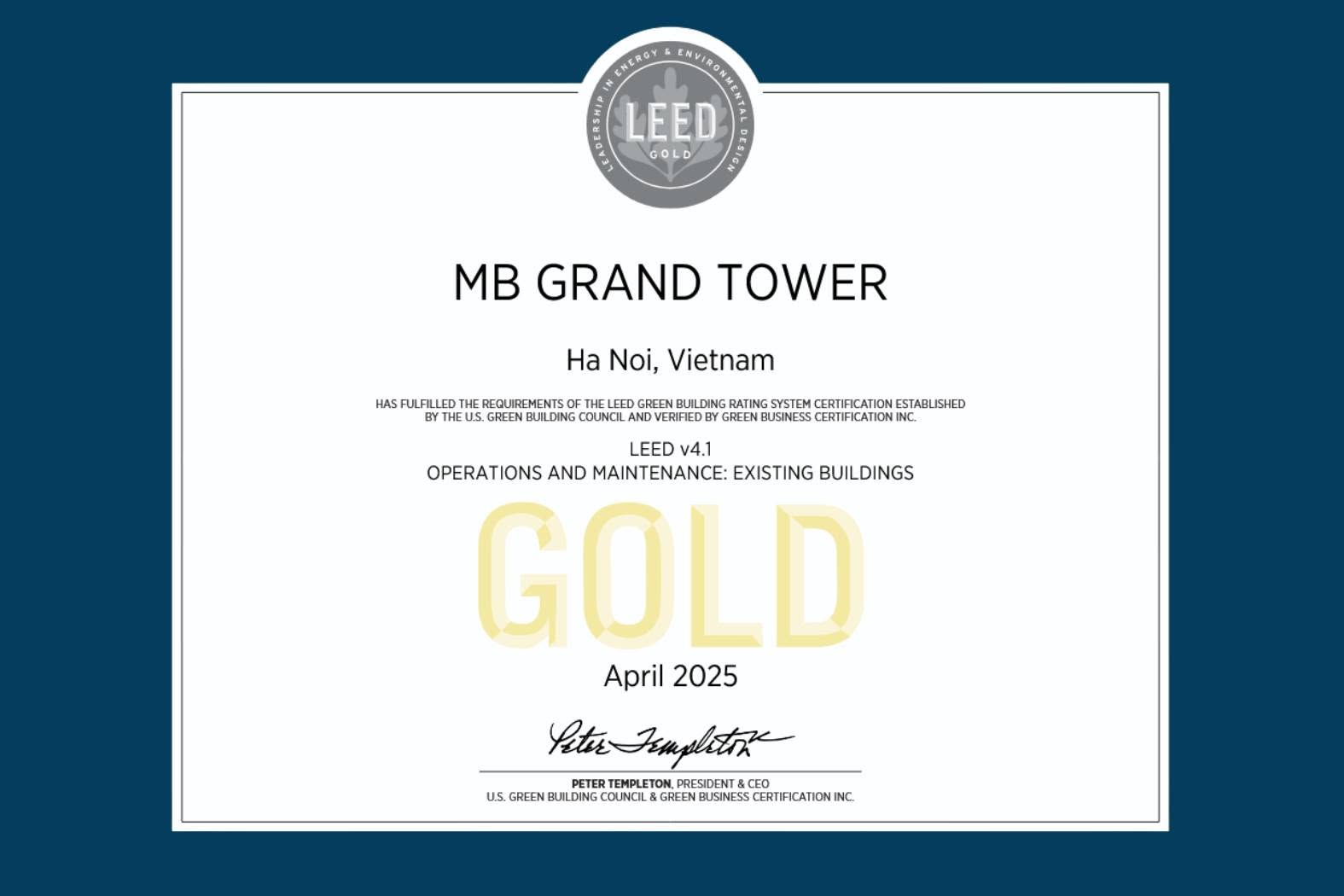
MBbank achieves LEED OM – Gold certification with the consulting support of VETS | EnE
Purpose of LEED Certification
LEED provides a framework for creating healthy, efficient, and cost-saving green buildings. LEED certification aims to ensure the mindful development, construction, and maintenance of buildings to benefit occupants and the environment by reducing waste and conserving resources.
LEED certification is not limited to specific elements such as energy, water, or health. Instead, it adopts a holistic approach to building design and construction, optimizing all aspects to create the best possible structures.
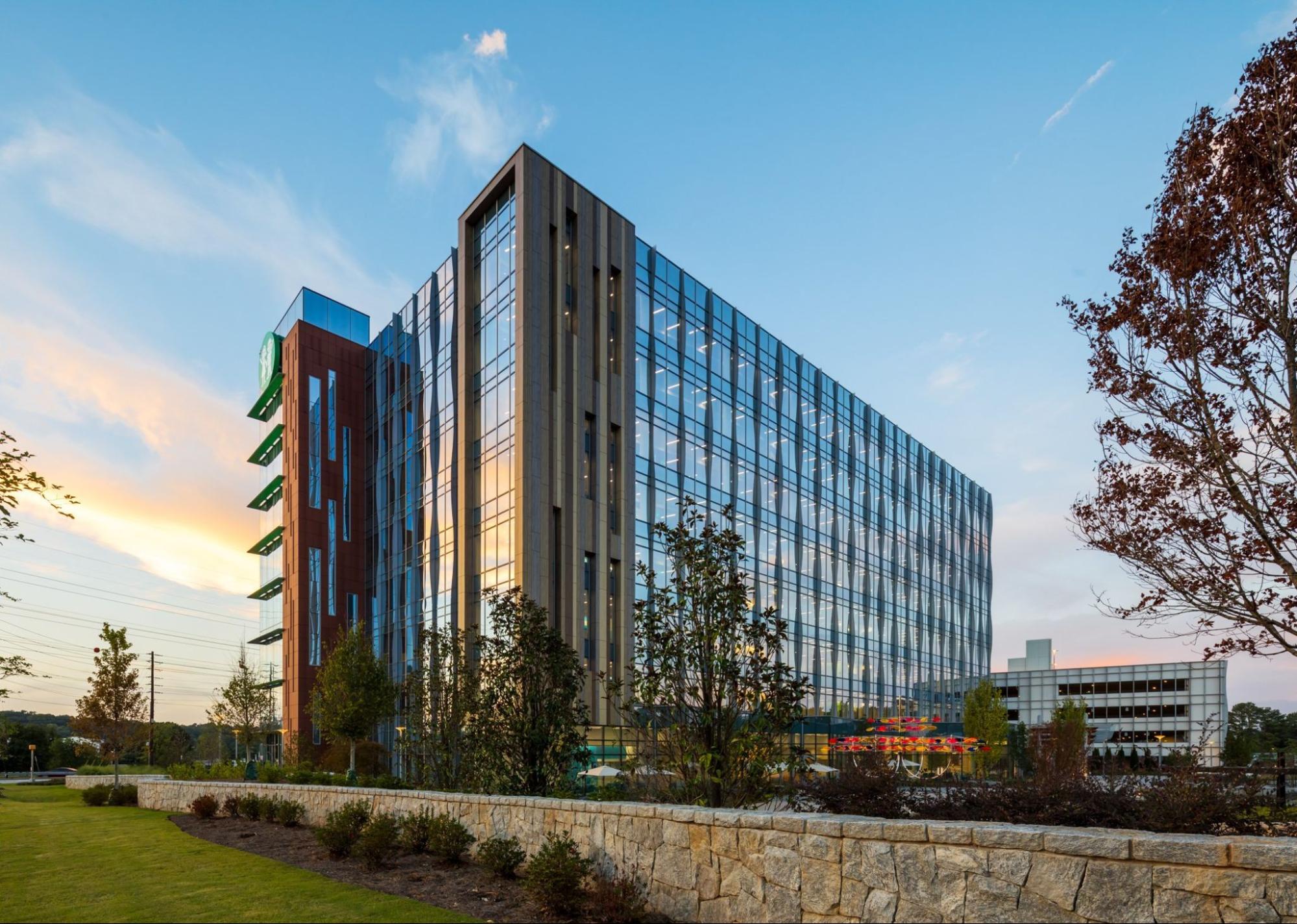
The primary objectives of LEED include:
- Mitigating contributions to global climate change.
- Enhancing individual human health.
- Protecting and restoring water resources.
- Safeguarding and augmenting biodiversity and ecosystem services.
- Promoting sustainable and regenerative material cycles.
- Elevating the quality of community life.
These objectives highlight LEED’s commitment to creating a sustainable and healthy built environment. By addressing these key areas, LEED certification ensures that our buildings and communities are developed to benefit both the environment and the people who inhabit them.
Owners and project teams choose LEED certification to inform, benchmark, and celebrate their sustainability goals and achievements.
Why Is a Greenhouse Gas Inventory Necessary?
1. Legal and Regulatory Requirements
In Vietnam, greenhouse gas inventory activities are governed by several legal documents, including:
- Law No. 72/2020/QH14: The Law on Environmental Protection, dated November 17, 2020.
- Decree No. 06/2022/ND-CP: Issued on January 7, 2022, regulating greenhouse gas emission reduction and ozone layer protection.
- Decision No. 42/2026/QD-TTg: Issued by the Prime Minister on August 10, 2026, promulgating the updated list of sectors and facilities required to conduct greenhouse gas inventories.
- Circular No. 96/2020/TT-BTC: Effective from February 1, 2021, providing guidance on information disclosure in the securities market, including greenhouse gas emissions reporting in annual reports of public companies.
2. Customer and Supply Chain Requirements
In today’s global economy, compliance with environmental regulations and sustainability requirements in export markets has become increasingly important.
Enterprises exporting products to international markets may be required to conduct greenhouse gas inventories and disclose product-level carbon emissions in accordance with the regulations of destination countries or regions and the requirements of their customers.
These practices promote transparency, support fair competition among manufacturers, and contribute to environmental protection.
3. Benefits of Obtaining LEED Certification
Here are some of the key benefits of obtaining LEED Certification:
Financial Benefits
LEED certification offers a range of significant financial advantages for property owners worldwide. Certified buildings can benefit from various financial incentives, including tax breaks and subsidies offered by numerous countries and municipalities. These financial perks make LEED certification an economically sound decision for many property owners.
Additionally, LEED-certified buildings are known for their operational cost-efficiency, with reported savings from 2015 to 2018 amounting to $1.2 billion in energy costs, $715.3 million in maintenance costs, $149.5 million in water costs, and $54.2 million in waste costs. These substantial savings underscore the financial viability of pursuing LEED certification.
Attracting Tenants
LEED certification is a powerful tool for attracting tenants, as green buildings tend to have lower vacancy rates—approximately 4 percent lower than non-green properties. Moreover, LEED-certified buildings command higher rents and boast lease-up rates that can be up to 20 percent above the market average. This enhanced attractiveness makes LEED-certified buildings preferred for tenants who value sustainability and cost-efficiency.
Environmental Benefits
LEED-certified buildings are designed to be more energy-efficient, use less water, and have a significantly smaller environmental footprint. They are crucial in reducing energy consumption and carbon emissions, contributing to a more sustainable environment. By adhering to LEED standards, buildings help conserve resources and promote environmental stewardship, positively impacting the planet.
Achieving ESG Objectives
Pursuing LEED certification can significantly contribute to achieving Environmental, Social, and Governance (ESG) objectives. By demonstrating a commitment to sustainable practices, organizations can meet their ESG goals, which are increasingly important to investors, stakeholders, and the broader community.
Improving Public Relations
Finally, LEED certification can enhance a company’s public image by showcasing its dedication to environmental stewardship and social responsibility. This commitment can improve public relations and build trust with customers, partners, and the community, reinforcing the company’s reputation as a leader in sustainability.
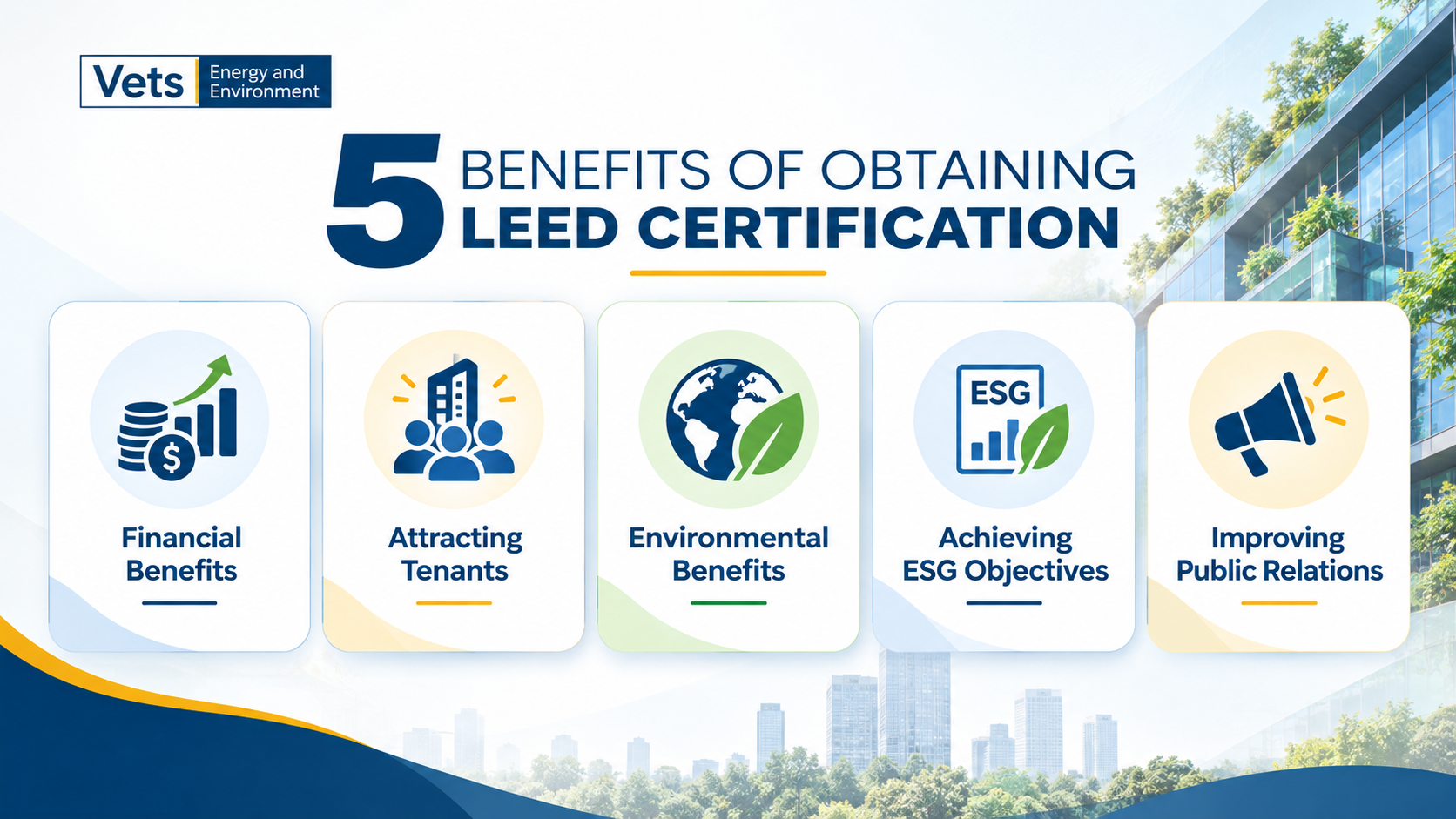
Benefits of Obtaining LEED Certification
LEED certification levels
To be awarded LEED certification, a building must meet all prerequisites and accumulate sufficient credit points for each evaluation criterion. The higher the credit score, the more the building demonstrates superior sustainability and environmental friendliness compared to conventional projects. The current LEED certification levels are categorized according to the following scale:
| Certification level | Scoring scale |
| LEED Certified | 40 – 49 points |
| LEED Silver | 50 – 59 points |
| LEED Gold | 60 – 79 points |
| LEED Tower | 80 points or more |
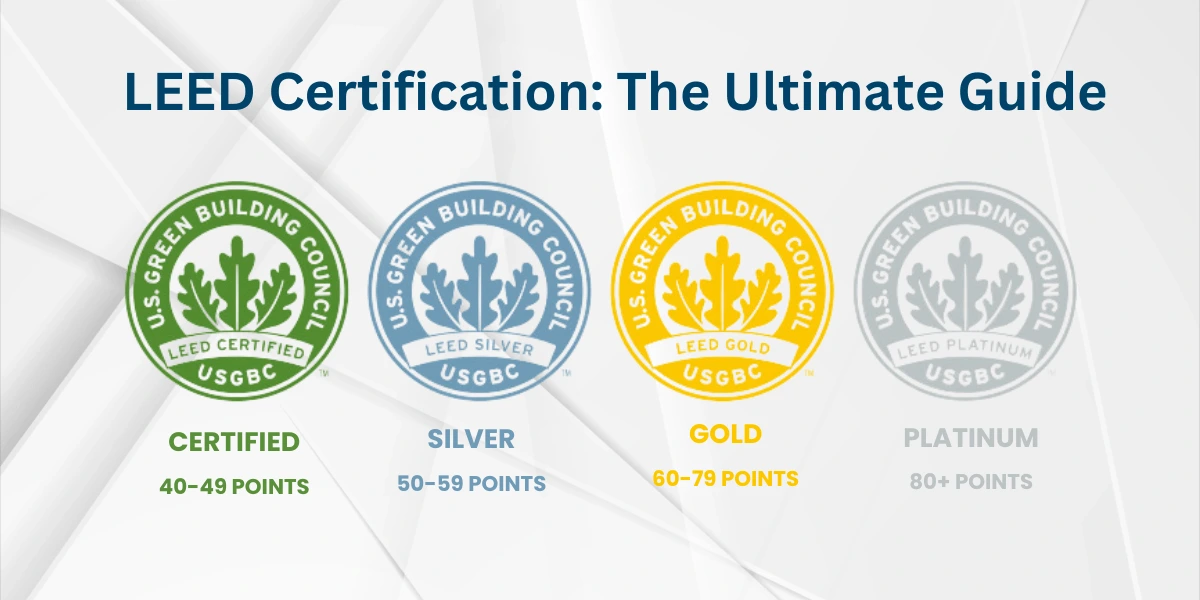
LEED certification levels
LEED Certification Minimum Requirements
To achieve LEED certification, every LEED project needs to meet minimum standards or characteristics. In fact, these minimum program requirements can guide the types of projects that are eligible for LEED certification. At the same time, it helps to reduce the number of issues that arise during the certification process.
- Ensure compliance with environmental regulations and standards
- Must comply with minimum floor area requirements
- Meet a minimum of building occupancy in terms of the number of users
- Maintain a reasonable site boundary
- Be in a permanent location on existing land
- Share energy and water usage data
- Must have a minimum building area to site area ratio
LEED certification is currently used for all types of buildings (commercial or residential) and projects. In other words, this can be a new construction or sustainability operations and maintenance upgrades. Obviously, it represents a certification that “creates healthy, highly efficient, cost-effective buildings” that improve environmental performance from carbon emissions to indoor environmental quality. In addition, obtaining a LEED certification brings a positive environmental image to the community. Thus, it is essential to accelerate the development and implementation of green building practices.
Green building development policies in Vietnam
| Legal documents | Note | Validity status |
| Resolution No. 55-NQ/TW | Vietnam’s National Energy Development Strategy to 2030, with a vision to 2045 | Effective from February 11, 2020 |
| Law No. 72/2020/QH14 | Environmental Protection Law of 2020 | Effective from January 1, 2022 |
| Decree No. 15/2021/ND-CP | Decree No. 15/2021/ND-CP provides detailed regulations on some aspects of construction investment project management. | Effective from March 3, 2021 |
| Resolution No. 140/NQ-CP | Issuing the Government’s Action Program to implement Resolution No. 55-NQ/TW dated February 11, 2020, of the Politburo on the orientation of the national energy development strategy of Vietnam until 2030, with a vision to 2045. | Issued on October 2, 2020 |
| Decree No. 209/2026/ND-CP | Regulations detailing certain provisions and implementation measures of the Construction Law regarding the management of construction materials. | Effective from July 1, 2026 |
These policies demonstrate that green building is becoming one of the key sustainable development directions of Vietnam’s construction industry, while also creating many opportunities and urgent requirements for businesses in green transformation.
VETS | EnE – a professional green building consulting firm
VETS | EnE provides comprehensive green building consulting and LEED certification services, partnering with businesses from current situation assessment and strategy development to technical solution consulting and certification documentation completion, aiming to optimize investment and operational efficiency.
Notably, VETS | EnE has become a Silver member of the US Green Building Council (USGBC). This is a significant step that affirms VETS | EnE’s capabilities and specialized focus, while also expanding opportunities to access new LEED trends and connect with a network of international experts and partners.
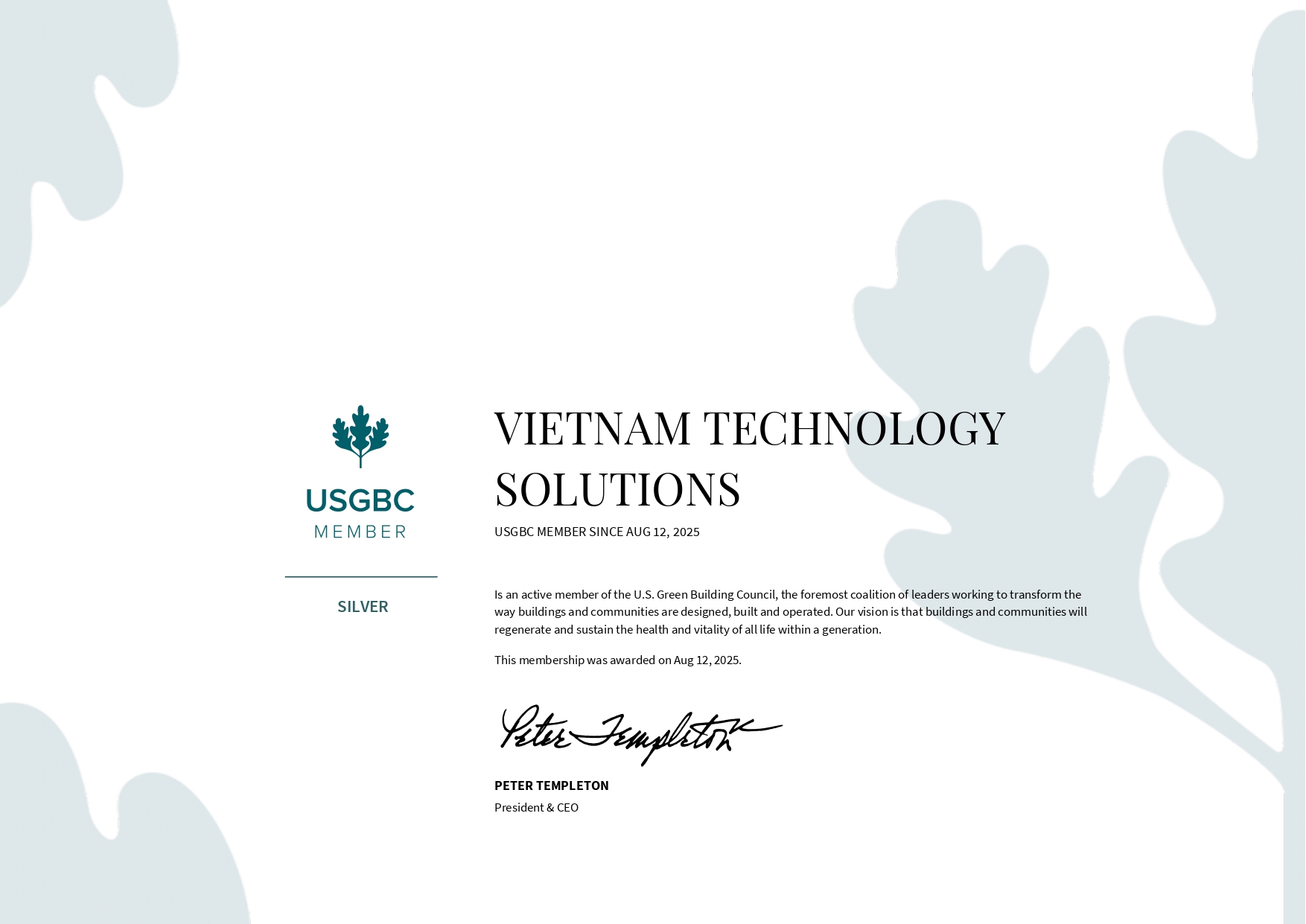
VETS | EnE becomes a silver member of USGBC
With a pioneering vision in the energy and environment sector, VETS is committed to providing comprehensive green building solutions, contributing to creating a sustainable future for the community.


