
In the trend of green transformation, ESG is increasingly becoming an important set of standards that helps businesses comprehensively assess environmental, social, and governance factors. Applying ESG not only helps businesses identify priority issues but also guides specific activities, from energy management and emission control to enhancing social responsibility and transparency in governance, towards sustainable development.

The ESG standards are applied to the company’s development strategy.
What is ESG?
ESG stands for Environmental, Social, and Governance. It is a set of standards used to evaluate environmental, social, and governance-related factors in a business’s operations.
ESG consists of three main pillars:
- Environmental: Refers to the impact of a business on the environment, such as greenhouse gas emissions, energy and natural resource use, water and waste management, and climate change response.
- Social: Focuses on the relationship between the business and its employees, customers, community, and stakeholders; including working conditions, health and safety, training, and human resource development.
- Governance: This relates to how a business is managed and operated, from its governance structure, transparency, and accountability to risk management and regulatory compliance.
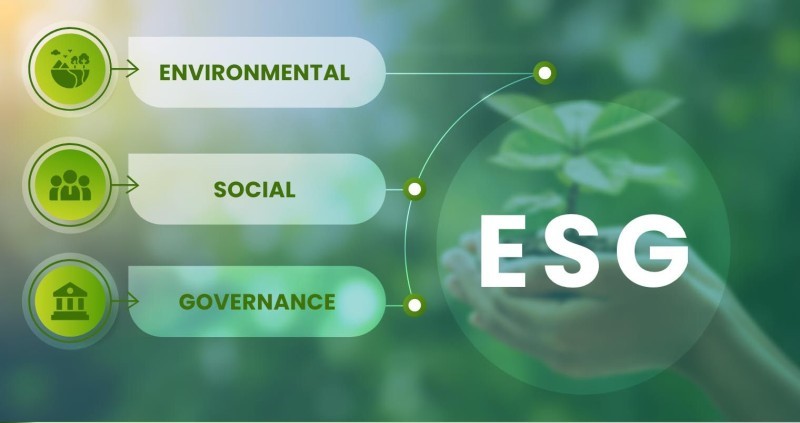
The three pillars of the ESG standard.
These three pillars are closely interconnected and need to be considered within the overall development strategy of the business.
> See also: https://vets.energy/csr-la-gi-su-khac-biet-giua-csr-va-esg/
Legal framework governing ESG in Vietnam
In Vietnam, ESG has been established and gradually promoted through various policies and legal regulations in different stages. Notably, Resolution No. 68-NQ/TW dated May 4, 2025, of the Politburo on the development of the private economy affirmed the importance of ESG, with the orientation: “The State shall have mechanisms to support interest rates and encourage credit institutions to reduce interest rates for private enterprises borrowing to implement green, circular projects and apply the environmental, social, and governance (ESG) framework.”

Legal framework governing ESG in Vietnam
The Law on Environmental Protection No. 72/2020/QH14 dated November 17, 2020, is considered a foundational legal document, playing a guiding role in the environmental activities of businesses as well as sustainable development strategies.
In addition, several other subordinate legal documents also play an important role in building and maintaining this pillar, such as:
– Government Decree No. 06/2022/ND-CP dated January 7, 2022, detailing regulations on greenhouse gas emission reduction and ozone layer protection;
– Government Decree No. 08/2022/ND-CP dated January 10, 2022, detailing a number of provisions of the Law on Environmental Protection;
– Decision No. 888/QD-TTg of the Prime Minister dated July 25, 2022, approving the Project on tasks and solutions to implement the results of the 26th Conference of Parties to the United Nations Framework Convention on Climate Change;
– Decision No. 896/QD-TTg of the Prime Minister dated July 26, 2022, approving the National Strategy on Climate Change for the period up to 2050;
– Decision No. 841/QD-TTg of the Prime Minister dated July 14, 2023, promulgating the Roadmap for implementing Vietnam’s Sustainable Development Goals until 2030;
– Decision No. 13/2024/QD-TTg of the Prime Minister dated August 13, 2024, promulgating the list of sectors and facilities emitting greenhouse gases that must conduct greenhouse gas inventories (updated);
In parallel with specific regulations on climate change and sustainable development, current legislation also integrates environmental protection requirements into specific areas such as:
– Law on Biodiversity No. 20/2008/QH12 dated November 13, 2008;
– Law on Economical and Efficient Use of Energy No. 50/2010/QH12 dated June 17, 2010;
– Law on Crop Production No. 31/2018/QH14 dated November 19, 2018;
– Law on Livestock No. 32/2018/QH14 dated November 19, 2018;
– Law on Water Resources No. 28/2023/QH15 dated November 27, 2023.
Why are businesses paying more attention to ESG?
Interest in ESG is growing in light of changes in the business environment, policies, and sustainable development requirements.
Regarding the Environment pillar, businesses need to pay attention to energy and resource use, greenhouse gas emission management, waste management, and environmental impacts.
Within the Social pillar, issues related to health, safety, working conditions, human resource development, and community responsibility are receiving increasing attention.
Meanwhile, the Governance pillar addresses issues of transparency, accountability, risk management, and compliance with relevant regulations.
Therefore, ESG is not a standalone activity or certification that businesses need to achieve. Implementing ESG standards requires businesses to consider multiple factors simultaneously in their operations and gradually integrate sustainable development goals into their strategies, governance, and operations.
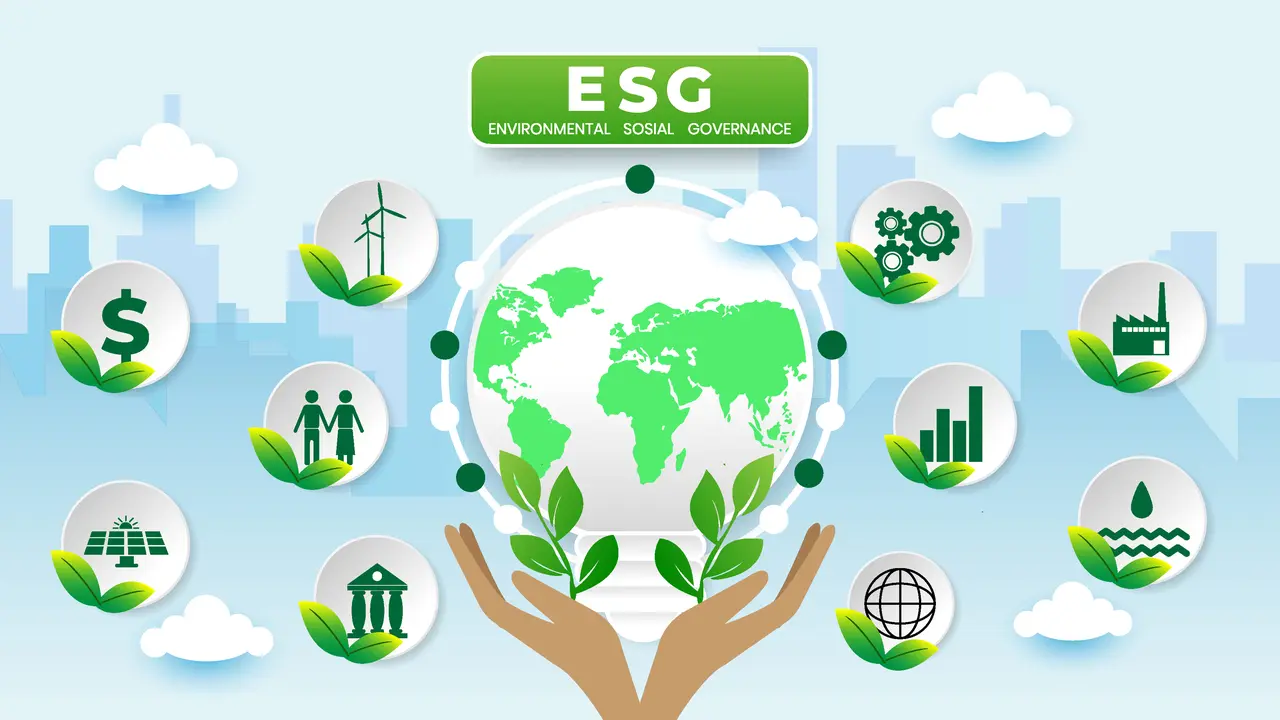
ESG is receiving increasing attention from businesses.
The role of ESG in businesses
ESG is not only used to assess factors related to sustainable development, but also helps businesses guide how to manage environmental, social, and governance issues in their operations.
Implementing ESG can bring many benefits to businesses:
- Enhancing reputation and trust: Focusing on transparency, accountability, and sustainable development helps strengthen the company’s image with customers, partners, and investors.
- Optimizing operations and costs: Managing energy, resources, and environmental risks helps businesses identify opportunities to improve operational efficiency.
- Enhancing risk management: ESG helps businesses consider environmental, social, and governance risks to develop appropriate management plans.
- Meeting market and supply chain demands: Environmental, emission, and sustainable development requirements are increasingly important in collaborations and supply chains.
- Human resource development: Focusing on health, safety, working conditions, and personnel development contributes to building a sustainable work environment.
- Towards long-term growth: ESG helps businesses balance business objectives with environmental, social, and governance issues.
ESG helps businesses enhance their reputation and market trust.
Implementing ESG & Net Zero strategies in businesses.
There is no single ESG implementation roadmap that suits every business. Each business’s size, industry, energy consumption, emission sources, and priority ESG issues are different. Businesses can begin by assessing their current situation, identifying priorities, setting goals, and selecting appropriate programs and solutions for implementation.
Specifically, for the Environmental pillar, key areas of interest for businesses include efficient energy management and utilization, greenhouse gas inventory, emission reduction, renewable energy use, and green building. These areas are also related to the Net Zero goal. To realize an ESG & Net Zero strategy, businesses need to understand their current emission status, identify key emission sources, and develop an emission reduction roadmap aligned with their actual operations.
Greenhouse gas inventory
Greenhouse gas inventory is a solution that helps businesses identify, measure, and monitor greenhouse gas emissions from their production, operation, and related activities. This forms the basis for businesses to manage the Greenhouse Gas Emissions (GHG) criterion under the Environment (E) pillar of the ESG standards.
- Through the inventory results, businesses can identify key emission sources and priority areas for improvement, including:
- Energy use: Identify emissions from electricity, fuel, and other energy sources to find opportunities for energy savings, efficiency improvements, and a transition to lower-emission energy sources.
- Production activities: Identify the stages, equipment, or processes that generate significant emissions, and then develop plans for technological improvement and operational optimization.
- Transportation and logistics: Assess emissions related to vehicles, material handling, and goods transportation to identify activities that need optimization.
- Supply chain: Expand the identification of indirect emission sources related to materials, suppliers, transportation, and activities within the value chain when the inventory scope includes these sources.
- Carbon governance: Establishing emission data as a basis for setting emission reduction targets and plans, and monitoring improvement over time.

Greenhouse gas inventories identify emission sources.
Therefore, greenhouse gas inventories help businesses shift from “estimating environmental impacts” to “measuring and managing emissions using data,” creating a basis for achieving emission reduction targets, supporting ESG reporting, and building a roadmap towards Net Zero. For facilities subject to inventory requirements, this also serves as a basis for meeting legal requirements related to greenhouse gas inventory and emission management.
>> See more: https://vets.energy/dich-vu-tham-tra-khi-nha-kinh/
Efficient energy management and utilization
Efficient energy management and utilization helps businesses control energy consumption during production and operation. Through energy audits, the development of energy management systems, and the implementation of energy-saving solutions, businesses can identify priority areas for improvement:
- Equipment and production lines: Identify energy-intensive equipment and processes to improve technology, increase efficiency, and reduce waste.
- Auxiliary systems: Evaluation and optimization of systems such as air conditioning, lighting, compressed air, pumps, fans, and other energy-consuming systems.
- Operational management: Monitoring consumption data, setting metrics, and controlling energy usage to maintain long-term efficiency.
- Energy resources: Consider energy-efficient solutions and gradually increase the use of renewable energy suitable to the company’s conditions.

Energy audit activities in businesses
Through this, businesses can reduce energy consumption, control operating costs, and decrease emissions related to energy use, while also generating data to monitor environmental goals. This forms the basis for businesses to gradually meet the criteria for energy efficiency and emission management in their ESG strategy and support their roadmap towards Net Zero.
Green building certification
Green building certification helps businesses assess and improve the efficiency of their offices, buildings, and factories in areas such as energy, water, and material usage, indoor environmental quality, and operations. This is one of the solutions that supports businesses in achieving their Environmental (E) goals, while also being linked to the Social (S) factor through improving the quality of the working environment.
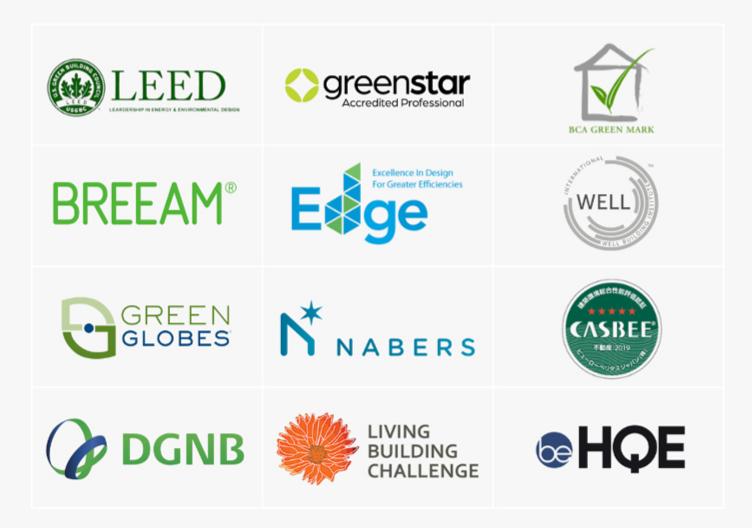
Common green building certifications
Some popular green building certification systems include LEED, BREEAM, LOTUS, etc. LEED ( Leadership in Energy and Environmental Design) is a green building certification system developed by the U.S. Green Building Council (USGBC). Through its evaluation criteria, businesses can identify and improve many aspects of their buildings.
- Energy efficiency: Optimizing energy consumption and improving the operational efficiency of systems within the building.
- Water usage: Control and optimize water consumption during operation.
- Materials and resources: Consider the selection, use, and management of materials according to the criteria of the certification system.
- Indoor environmental quality: Improving factors that affect the health, comfort, and working environment of users.
- Project management and operation: Incorporating sustainable development criteria into the process of managing, monitoring, and improving the efficiency of the project.
Therefore, green building certification helps businesses concretize several ESG goals at the building level, especially regarding energy efficiency, resource use, and indoor environmental quality. Achieving certifications like LEED also contributes to enhancing the value and recognition of the building, creating a better working environment, supporting emission reduction goals, and demonstrating the company’s commitment to sustainable development.

LEED certification is awarded to buildings that meet green building standards.
>> See more: https://vets.energy/dich-vu-tu-van-cong-trinh-xanh/
Conclude
ESG encompasses many environmental, social, and governance issues. Therefore, businesses cannot implement ESG through a single solution or certification. Depending on their field of operation, current status, and development goals, businesses need to identify priority issues and choose a suitable roadmap. Specifically for the Environmental pillar, greenhouse gas inventory, efficient energy management and use, emission reduction, renewable energy use, and green building development are concrete activities within the process of implementing an ESG & Net Zero strategy.
With nearly 20 years of experience in the energy and environment sector, VETS | EnE partners with businesses in energy audits, greenhouse gas inventories, and green building certification consulting, supporting businesses in gradually realizing ESG goals and moving towards sustainable development.


