
On the afternoon of August 14, 2026, in Da Nang, Mr. Nguyen Trong Hau – an expert from VETS | EnE – shared insights on mechanisms and policies supporting businesses in using energy efficiently and effectively at a workshop organized by the Department of Innovation, Green Transformation and Industrial Promotion, Ministry of Industry and Trade.
Policies to encourage businesses to use energy efficiently and effectively.
Against the backdrop of increasing energy demand and the growing need for a green transition, the workshop “Disseminating and Updating New Regulations on Energy Saving and Efficiency” focuses on updating new policies and regulations, while promoting awareness and action among businesses, organizations, and management agencies in practicing energy saving and efficiency.

Overview of the workshop “Disseminating, popularizing, and updating new regulations on energy saving and efficiency”
During the program, VETS | EnE experts shared key information on mechanisms and policies supporting businesses in using energy efficiently and effectively, along with practical experiences in implementation. This provided businesses with a better foundation to proactively understand policies, choose appropriate solutions, improve operational efficiency, and move towards sustainable development.
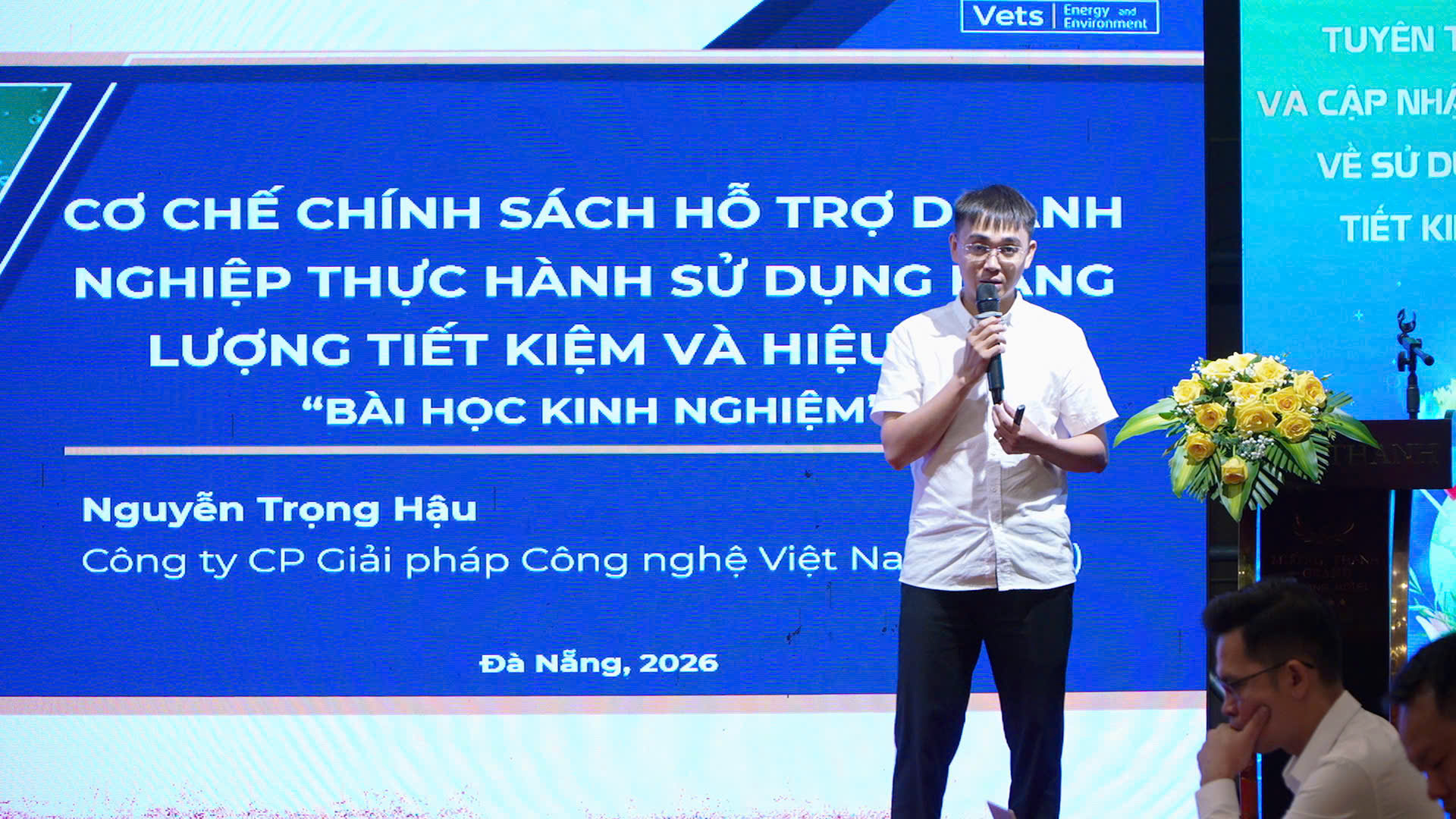
Mr. Nguyen Trong Hau – Head of VETS Solutions Consulting Department | EnE shared information about mechanisms and policies supporting businesses in practicing energy saving and efficiency.
Over the years, the Party, State, and Government have continuously improved the legal framework and issued numerous policies and support programs to promote energy conservation and efficiency nationwide. This also forms an important foundation for businesses to shift from complying with regulations to proactively optimizing energy use, reducing costs, and enhancing competitiveness.
Policy mechanisms to support businesses in practicing energy saving and efficiency, and lessons learned.
Sharing information about the policy mechanisms supporting businesses in practicing energy saving and efficiency, Mr. Nguyen Trong Hau stated that the legal framework includes:
- Law on Economical and Efficient Use of Energy and Law amending and supplementing certain articles of the Law on Economical and Efficient Use of Energy;
- Decree No. 30/2026/ND-CP provides detailed regulations on a number of articles and measures for organizing and guiding the implementation of the Law on Economical and Efficient Use of Energy;
- Decree No. 77/2022/ND-CP stipulates administrative penalties for violations in the field of energy saving and efficiency.
- Circular No. 25/2020/TT-BCT and Circular No. 52/2025/TT-BCT ;
- Decisions of the Provincial People’s Committee and the National Program on Energy Saving and Efficiency in each phase.

The legal framework provides the basis for businesses to develop energy-saving and efficient energy use plans that align with their development strategies.
Besides the system of Laws, Decrees and Circulars, businesses can also access many programs and projects supporting the implementation of energy saving solutions, such as the VSUEE Project, the KOICA Project, the VAS Program, etc.
A thorough understanding of legal regulations and support mechanisms is crucial for businesses to proactively develop appropriate energy usage plans, select effective investment solutions, and meet increasingly stringent energy management requirements.
Outstanding results from the National Program on Energy Saving and Efficiency.
According to presentations at the workshop, the National Program on Energy Saving and Efficiency has achieved many notable results, contributing to laying the foundation for the transition to a model of efficient energy use and sustainable development.
Some of the notable results mentioned include:
- Saving 5–7% of the country’s total energy consumption ;
- Gradually improve the legal and policy framework on energy conservation and efficiency;
- Reduce power losses to below 6.5% ;
- Developing specialized human resources, with approximately 2,200 energy management officers at factories, 250 energy auditors, and 27 finance officers for energy saving projects ;
- Approximately 100 energy-consuming facilities have implemented energy management systems, contributing to a reduction in energy consumption in the industrial sector.
- 80 construction projects have received green building certification.
- Promoting the transformation of the market for energy-efficient equipment;
- Approximately 70% of industrial parks and 50% of industrial clusters have accessed and applied energy efficiency and conservation solutions.
- 90% of provinces and centrally-administered cities have developed and approved plans/programs for efficient and effective energy use.
- Maintain and develop a network of units operating in the field of energy saving and cleaner production .
The above results show that energy conservation and efficiency are gradually becoming an important component in energy management strategies, cost optimization, and enhancing the competitiveness of businesses. Along with the improvement of the legal framework and the expansion of support programs, businesses have increasingly more opportunities to proactively implement energy-saving solutions tailored to their specific production and business activities.

Participants in the workshop received practical updates on new policies and laws in the field of energy conservation and efficiency.
Through the expert presentations from VETS | EnE, businesses not only receive updates on important regulations and policies but also gain practical insights into how to effectively approach and utilize support mechanisms during implementation. Simultaneously, this understanding of policies, combined with professional expertise and practical experience, forms the foundation for VETS | EnE to partner with businesses in assessing current energy usage, identifying potential savings, and selecting appropriate solutions.


