On October 2nd, 2026, VETS | EnE, in collaboration with the Hai Phong Economic Zone Management Board and the UNIDO Project Management Board, organized a workshop on greenhouse gas (GHG) inventory training for three industries: plastics, electronic components, and steel production and processing, contributing to enhancing business capacity and promoting the transformation of eco-industrial parks.
Enhancing greenhouse gas inventory capacity for businesses.
The program is part of a strategy to promote the transformation of eco-industrial parks, focusing on enhancing the capacity of businesses in conducting inventories, calculations, and management of greenhouse gas emissions. The workshop content is designed to combine the legal framework, implementation methods, and calculation practices, enabling participants to relate it to their actual production activities.
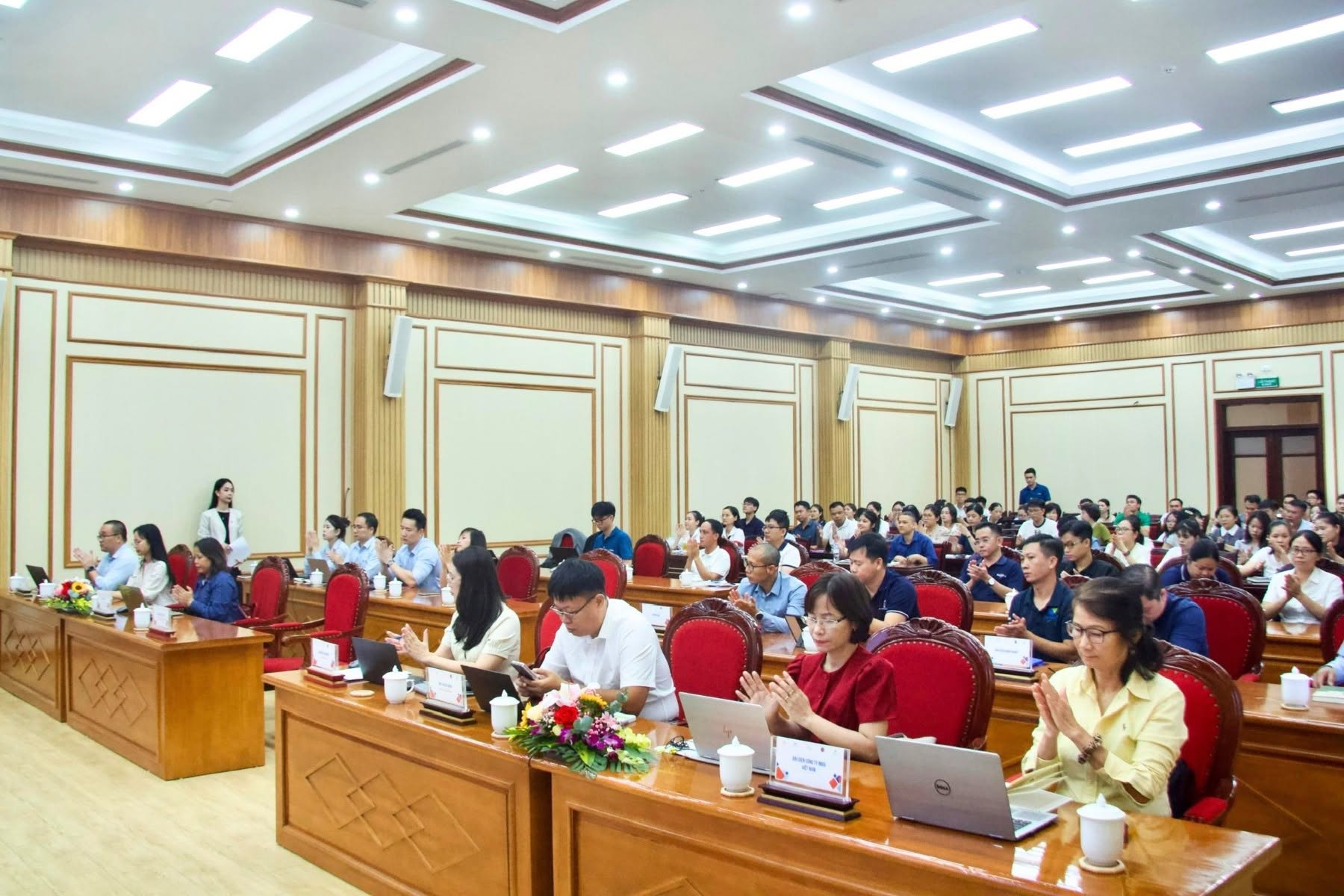
Overview of the Conference
According to the program, the content covered ranges from the development orientation of eco-industrial parks in Hai Phong, legal requirements for greenhouse gas inventory, to the introduction of tools and practical exercises for calculating emissions for each industry group.
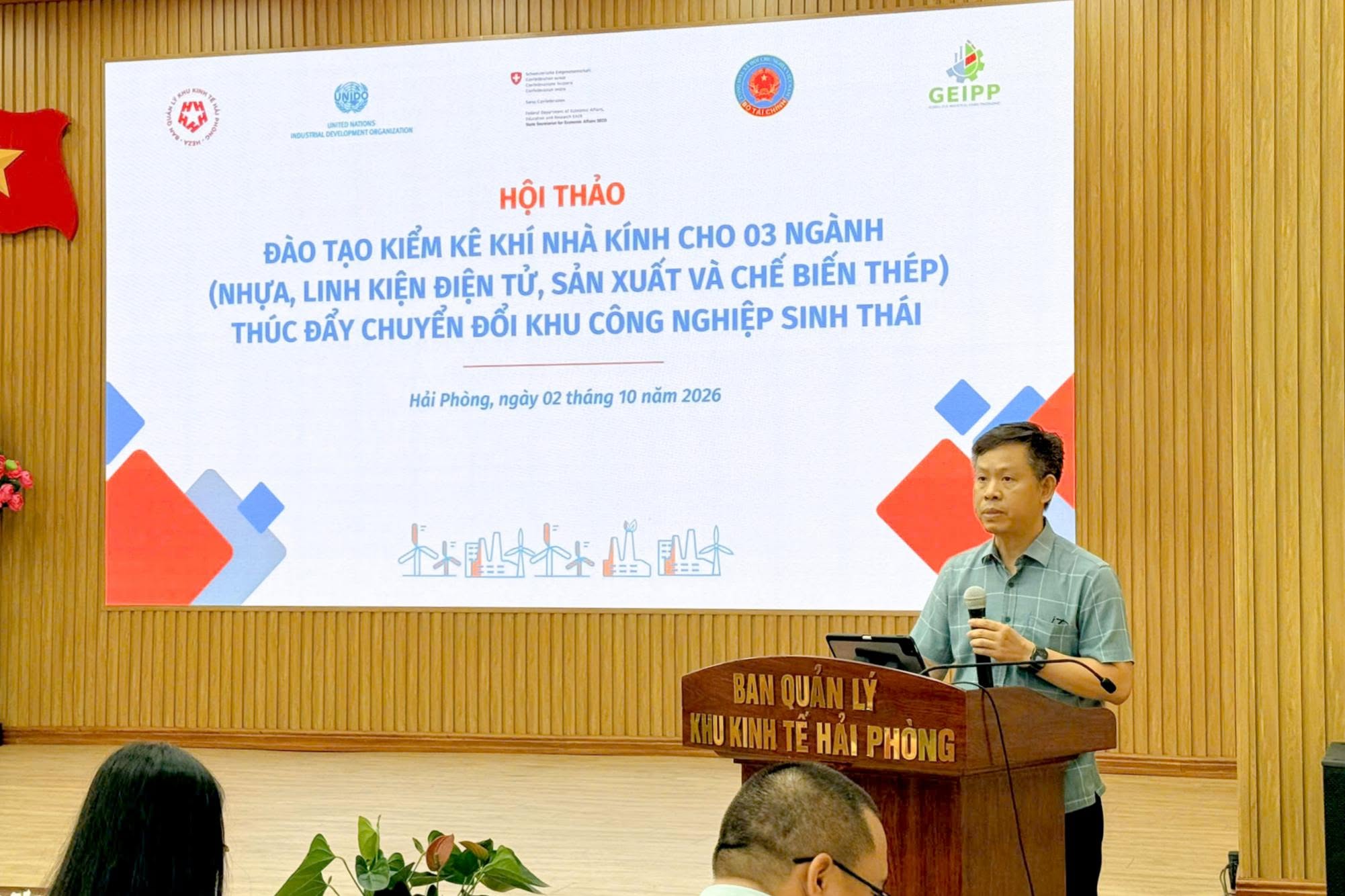
Mr. Nguyen Duc Thinh – Head of the Department of Natural Resources and Environment, Hai Phong Economic Zone Management Board, delivered the opening remarks.
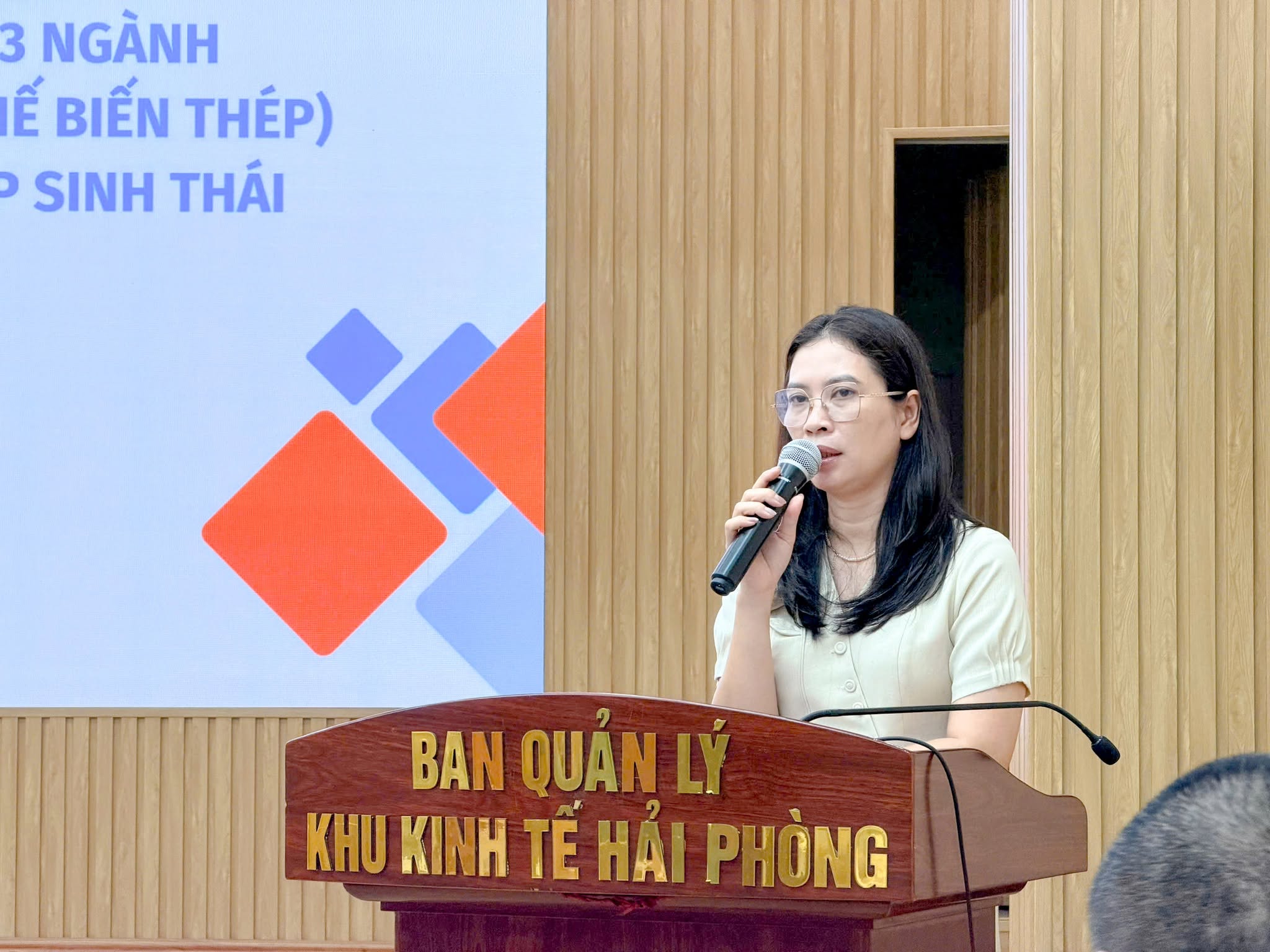 Ms. Nguyen Tram Anh – UNIDO National Project Manager – delivered the opening remarks for the program.
Legal framework for greenhouse gas inventory
Greenhouse gas (GHG) inventory activities in Vietnam are implemented based on an increasingly完善 legal system and guiding documents, creating a foundation for businesses and facilities subject to inventory to carry out the process uniformly.
Sharing his insights on this matter, Mr. Duong Chi Cong – a VETS | EnE expert – stated that the legal framework is established by the Law on Environmental Protection No. 72/2020/QH14, along with detailed regulations and implementing guidelines, including Decree No. 06/2022/ND-CP, Decree No. 119/2025/ND-CP, Decree No. 83/2026/ND-CP, and Decree No. 45/2022/ND-CP. These regulations are systematized in Consolidated Document No. 48/VBHN-BNNMT, which consolidates relevant content from Decree No. 06/2022/ND-CP, Decree No. 119/2025/ND-CP, and Decree No. 83/2026/ND-CP.
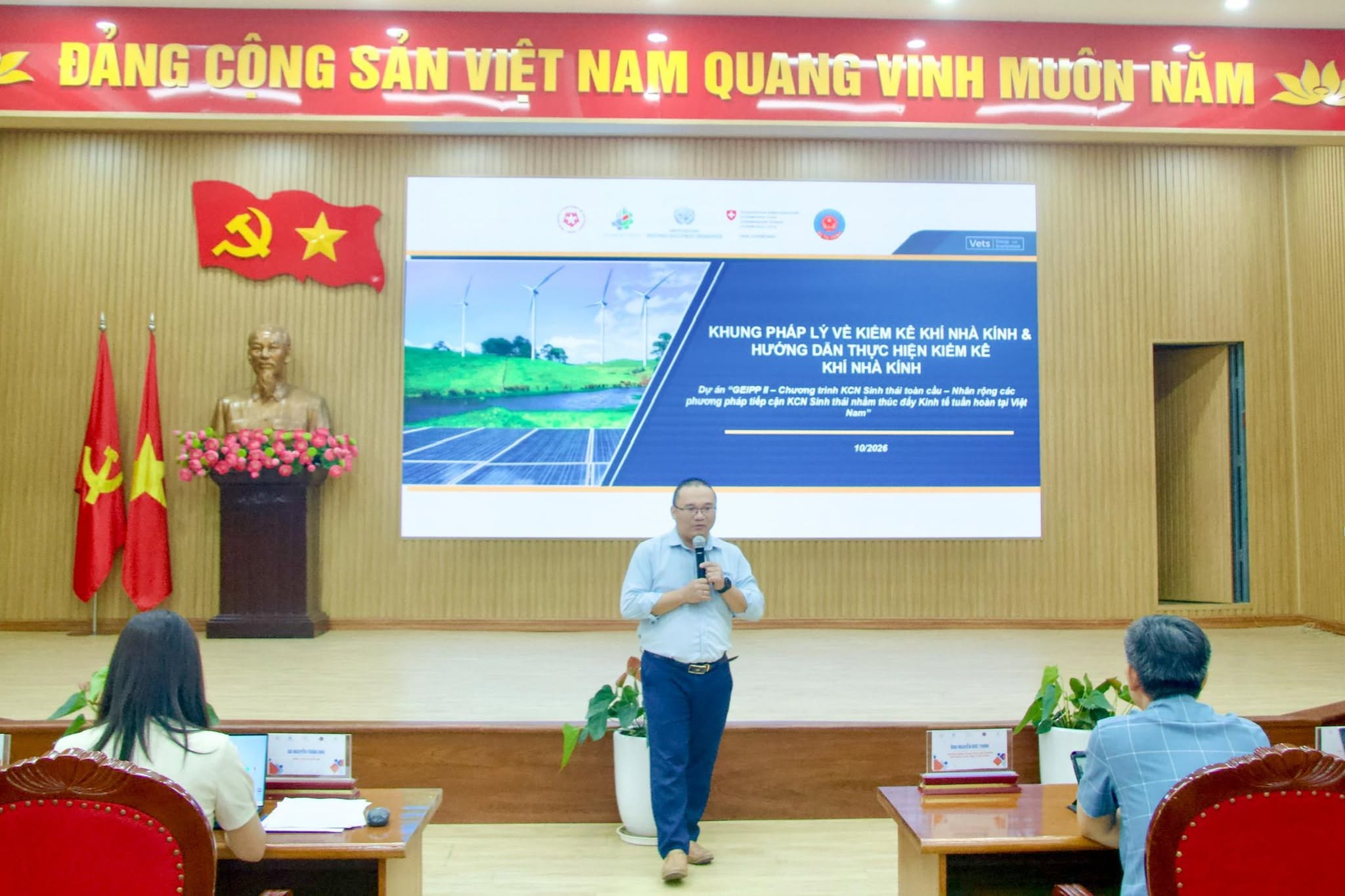
Mr. Duong Chi Cong – VETS expert | EnE speaks about the legal framework for greenhouse gas inventory.
In addition, Circular No. 38/2023/TT-BCT and related decisions such as Decision No. 26/2026/QD-BTNMT, Decision No. 42/2026/QD-TTg, and Decision No. 699/QD-BNNMT further specify the requirements and implementation methods. This system of documents serves as the basis for facilities on the inventory list to determine the scope, collect operational data, select calculation methods, and conduct inventories and report greenhouse gas emission results as prescribed.
GHG emission calculator toolkit for three industries: plastics, electronic components, and steel production and processing.
Next, Mr. Nguyen Dinh Kien – VETS | EnE expert – introduced and guided the use of the toolset and methodology for calculating greenhouse gas emissions for three industries: plastics, electronic components, and steel production and processing.
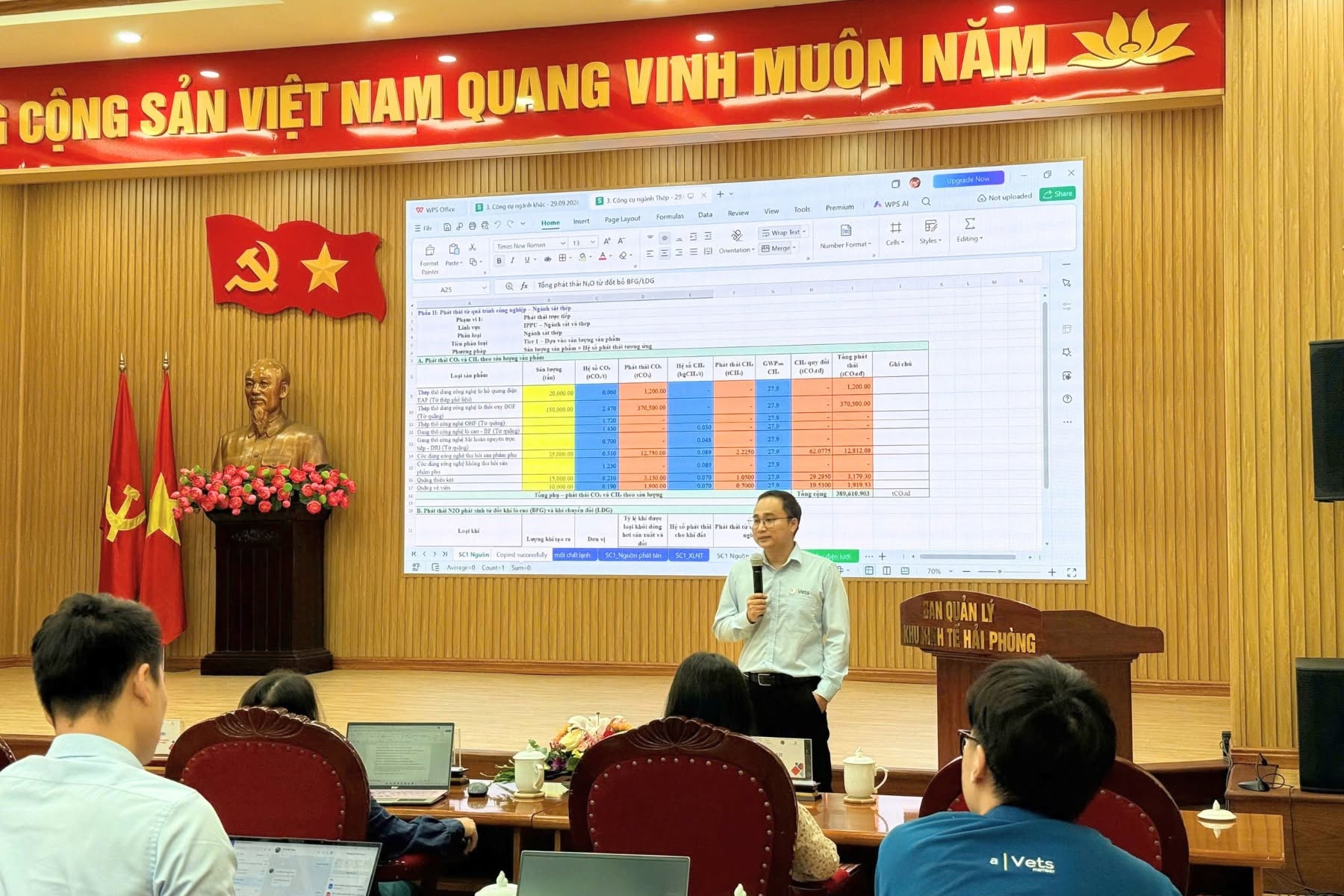
Mr. Nguyen Dinh Kien – VETS Expert | EnE introduces and guides the use of the toolkit and practical exercises for calculating greenhouse gas emissions for three industries: plastics, electronic components, and steel production and processing.
This tool is designed to assist manufacturing facilities, factories, and businesses in standardizing the process of aggregating operational data and calculating emissions according to national and international (IPCC) methodologies.
The toolkit covers emission sources falling under Scope 1 and Scope 2, including direct emissions from fuel combustion, refrigerants, emission sources, IPPU activities, and wastewater treatment; it also calculates indirect emissions from grid electricity consumption and the use of purchased steam.
Strengthening greenhouse gas inventory capacity in practice.
In addition to the professional presentations, the practical sessions and discussions with representatives from various businesses clarified common issues and questions regarding the implementation of greenhouse gas inventories according to current regulations and the application of the calculation tools to real-world scenarios, thereby helping businesses better understand and correctly implement the regulations.
During the presentation, Mr. Ta Van Trung – a national expert on eco-industrial parks – introduced the global trend of tightening regulations on greenhouse gas inventory, and demonstrated that eco-industrial park solutions such as energy management, waste heat recovery, renewable energy, and industrial symbiosis are tools that directly reduce emissions. According to the results of the GEIPP program in Vietnam, these solutions have been implemented in 10 industrial parks and 160 businesses, saving approximately US$9.1 million and reducing more than 341,000 tons of CO₂ equivalent annually.
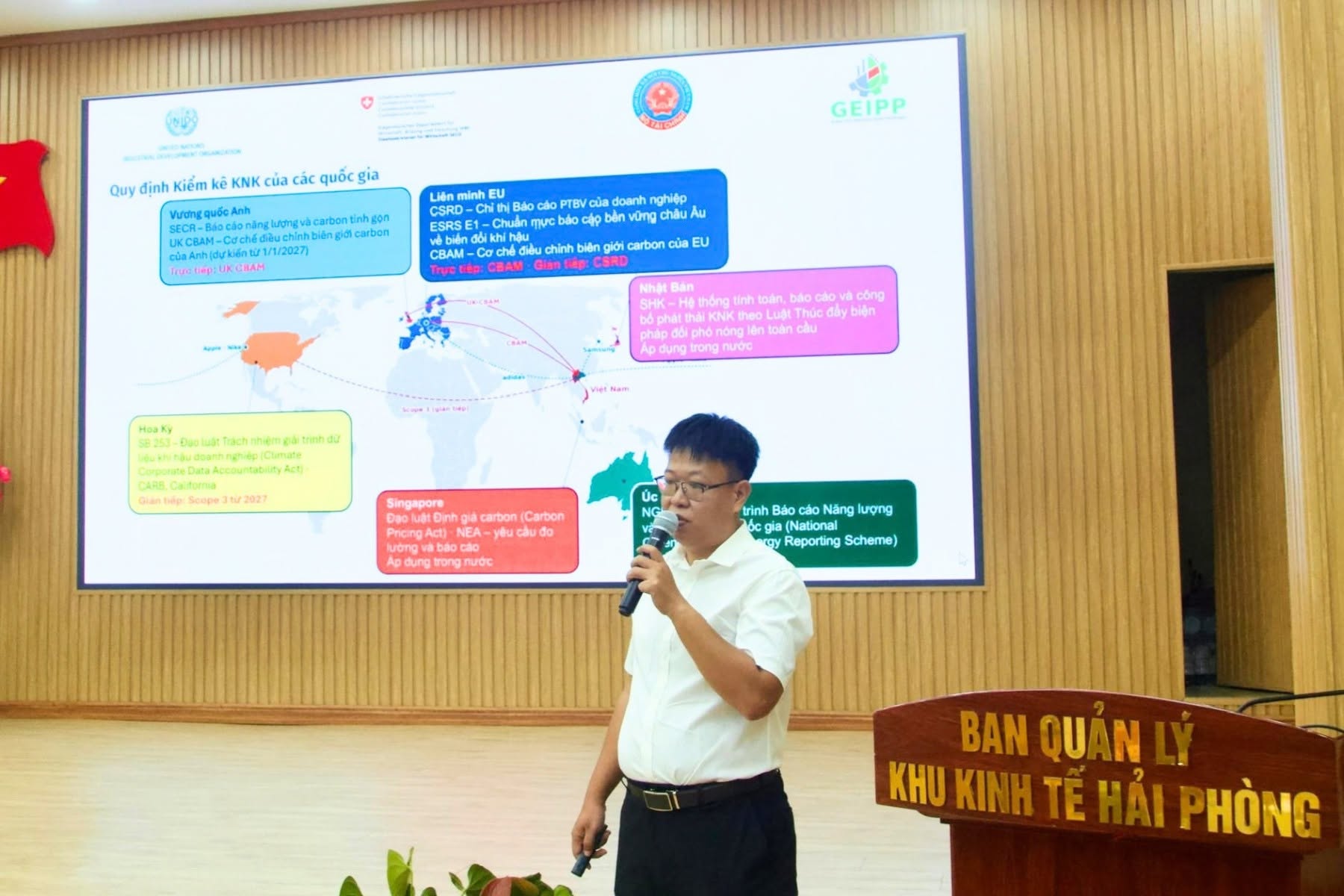
Mr. Ta Van Trung – National Eco-Industrial Park Expert – shared insights on practical applications for transitioning to eco-industrial parks.
Combining expertise and practice helps businesses gradually improve their capacity for inventory and emission management, identify emission reduction opportunities, and lay the foundation for meeting environmental requirements and transforming into eco-industrial parks.
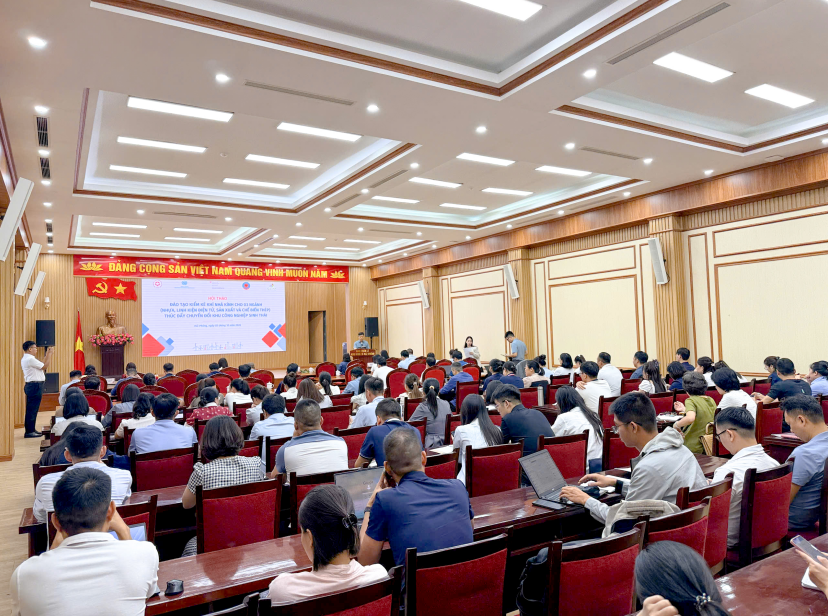
The delegates listened and discussed the program content.
The workshop also provided an opportunity for VETS | EnE experts to share knowledge, methods, and practical experience in greenhouse gas inventory and management, and to exchange ideas with stakeholders on requirements and solutions suitable for each industry. Through this, VETS | EnE contributes to improving the capacity for inventory and emission management, promoting the transition towards eco-industrial parks in Hai Phong.
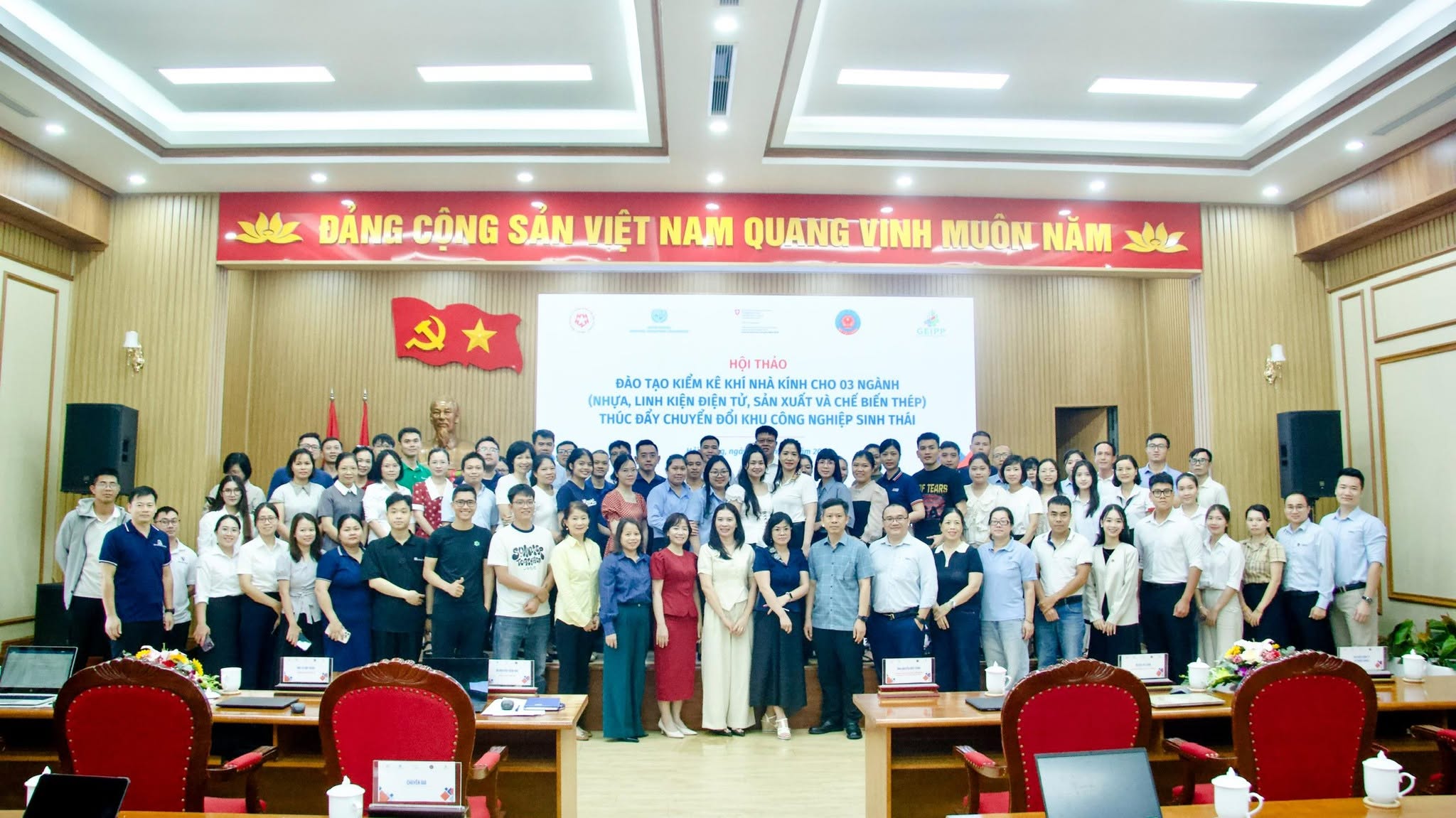
The delegates attending the workshop took a commemorative photo.


